🔘 IN GR TR AL OF CO xxxxx 1️⃣ 2️⃣ 3️⃣ ✅ 5️⃣ 6️⃣ 7️⃣ 8️⃣ xxxxx AN RP IV alia
0023 IN Deus in nomine tuoModus 4
0018 ⟽ IN 4 ⟾ 0025 xxx ⏹️ xxx GT 116 - GrN 2/66 - BzG 55/30
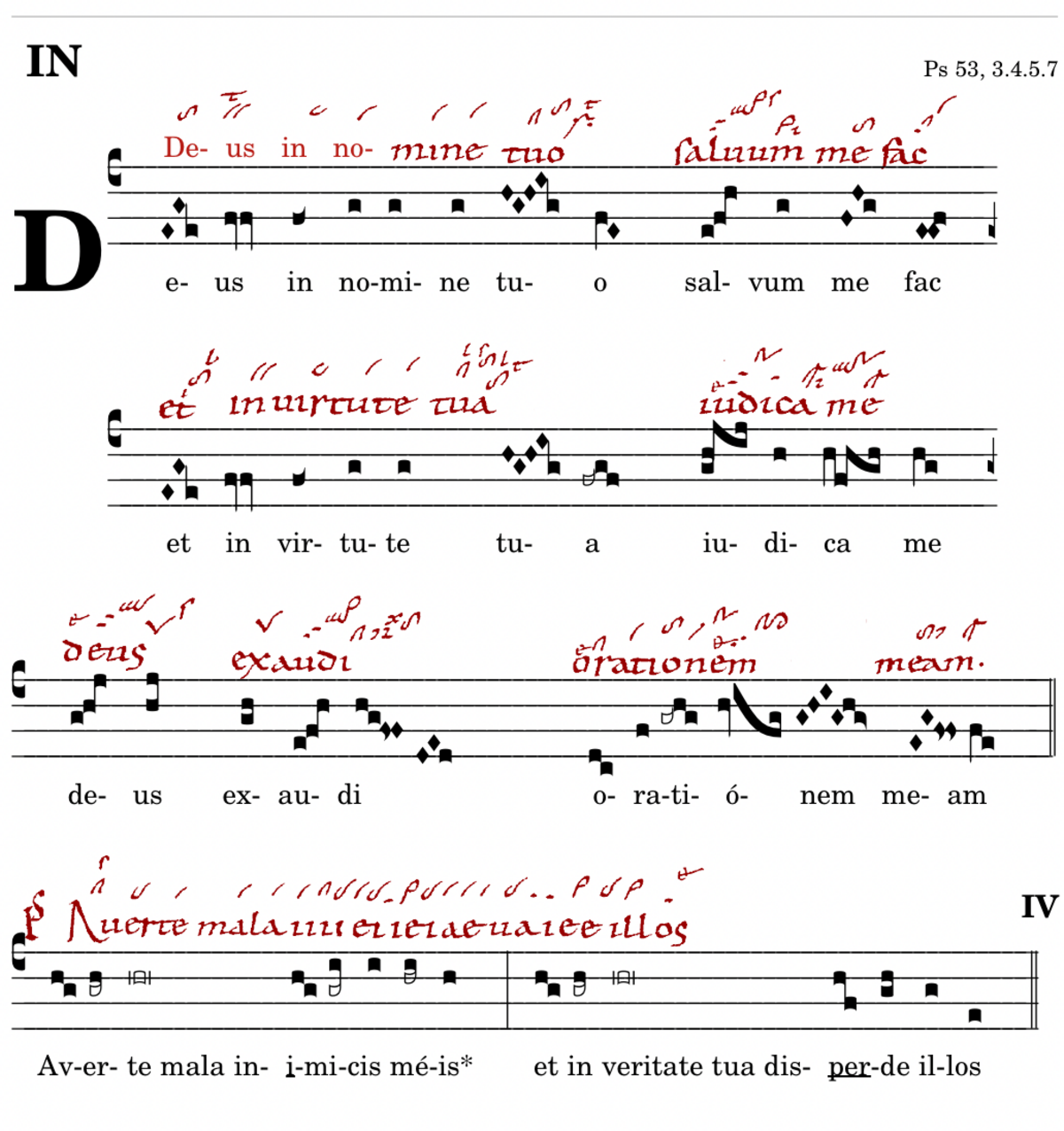
Es ist nicht zu verstehen, warum das GrN das si-be-molle nicht auf den Kompost der Geschichte wirft. Si-be-molle gibt es im 3. und 4.Modus grundsätzlich nicht. vide 0001 Kommentar. In „tu-o“, „tu-a“ aber auch in „orati-o-nem“ bezieht sich das „si“ auf „sol“. In unseren Quellen gibt es kein „sa“! Kl geht zum „do“. Unmengen weiterer Zeugen aufzurufen ist nicht zielführend und verschleiert die Situation. Einzig der Tritonus in
„orati-o-nem“ ist diskussionwürdig.
Den Tritonus als „diabolus in musica“ zu bezeichen ist frühneuzeitliche Ideologie, nicht zuletzt der Polyphonie geschuldet, ist barockes Stilmittel das Böse auszudrücken (z.B.: H.Schütz opus ultium „alle falschen Weg“) und ist in der katholischen Kirchenmusik des 19. und beginnenden 20. Jahrhunderts absolut unmöglich. Ob das einen Musikermönch des 9. und 10. Jahrhundert bekümmert hat? Das Intervall si-be-durum zu fa (h-f) bildet hier nicht mehr als die Wechselnoten zu „la-sol“. Diese zwei Strukturtöne sind eingebettet in die klassische Einleitung der Antiphonen des 1. Modus… a.e. 0513 und der ebenso klassischen Terminatio der Responsorien des 4. Modus, die zweifelfrei „si“ haben muss a.e.: 7317. Das RP „Intuens in caelum“ 7415 ist das Urbild für diese Stelle und gibt das Vorbild für die gesamte Zeile „deus exaudi orationem meam“.
Gott, in deinem Namen mache mich heil,
und und in deiner Macht richte mich.
Gott, erhöre / mein Gebet.

God, in your name, heal me,
and in your power, judge me.
God, hear my prayer.
It is incomprehensible why GrN does not consign si-be-molle to the dustbin of history. Si-be-molle does not exist in the 3rd and 4th modes. See 0001 comment. In “tu-o”, “tu-a” and also in “orati-o-nem”, “si” refers to “sol”. There is no “sa” in our sources! Kl goes to “do.” Calling up tons of other examples isn't helpful and just confuses the situation. Only the tritone in
“orati-o-nem” is worth discussing.
Describing the tritone as “diabolus in musica” is early modern ideology, not least due to polyphony, and is a Baroque stylistic device for expressing evil (e.g., H. Schütz opus ultium “alle falschen Weg”) and is absolutely impossible in Catholic church music of the 19th and early 20th centuries. Did this bother a monk musician of the 9th and 10th centuries? The interval si-be-durum to fa (h-f) is nothing more than the alternating notes to “la-sol.” These two structural tones are embedded in the classical introduction of the antiphons of the 1st mode… a.e. 0513 and the equally classical terminatio of the responsories of the 4th mode, which undoubtedly have “si” must a.e.: 7317. The RP “Intuens in caelum” 7415 is the archetype for this passage and provides the model for the entire line “deus exaudi orationem meam.”