🔘 IN GR TR AL OF CO xxxxx 1️⃣ 2️⃣ 3️⃣ 4️⃣ 5️⃣ ✅ 7️⃣ 8️⃣ xxxxx AN RP IV alia
0008 IN Cantate dominoModus 6
3171 / 1160 ⟽ IN 6 ⟾ 0024 xxx ⏹️xxx GT 225 - GN 198 - BzG 30/11
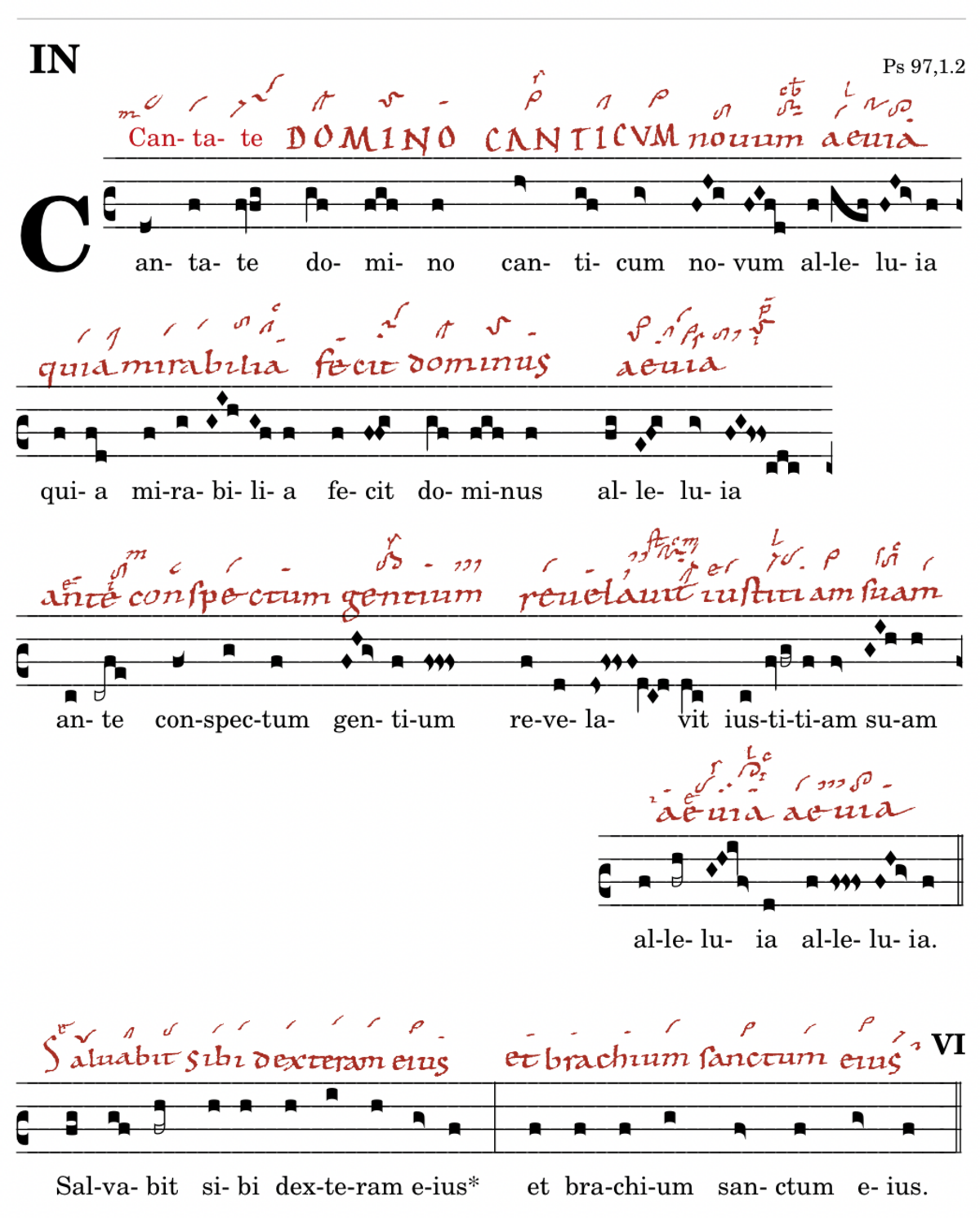
„Can-tate“ das 'mediocriter' meint Terzeinstieg im Gegensatz zu „ante conspectum“, das mit Quart zur Rezitationseben „fa“ aufsteigt.
„ante conspectum gentium“
TrcINT inferius vor dem Trc soll eine do-revidiertes „la-do-si“ verhindern. Der Cento nutzt zwei unterschiedliche Möglichkeiten zu akzentuieren.a) die schlichte Melodiebewegung „do - ré - do“, Epiphonus auf „con-“ verhindert einen Pes auf dem Sinnakzent„. Es soll nicht „cónspéctum“ gesprochen werden sondern nur schlicht „conspéctum“. b) Der Hauptakzent liegt auf „géntium“ Trc „do-mi-re“ (cf.: 0120).


Singet dem Herrn ein neues Lied,
Halleluja,
denn wunderbare Taten hat der Herr vollbracht,
Halleluja!
Vor den Augen der Völker /
hat er seine Gerechtigkeit enthüllt!
Halleluja, Halleluja.
Sing to the Lord a new song, Hallelujah,
for the Lord has done wonderful things, Hallelujah!
Before the eyes of the nations / he has revealed his righteousness! Hallelujah, Hallelujah.
“Can-tate” 'mediocriter' refers to the third entry, in contrast to “ante conspectum,” which ascends with a fourth to the recitation level “fa.”
“ante conspectum gentium”
TrcINT inferius before the Trc is intended to prevent a do-revised “la-do-si.” The cento uses two different ways of accenting. a) The simple melodic movement “do - ré - do,” epiphonus on “con-” prevents a pes on the stress accent. It should not be pronounced “cónspéctum” but simply “conspéctum”. b) The main accent is on “géntium” Trc “do-mi-re” (cf.: 0120)