🔘 IN GR TR AL OF CO xxxxx 1️⃣ 2️⃣ ✅ 4️⃣ 5️⃣ 6️⃣ 7️⃣ 8️⃣ xxxxx AN RP IV alia
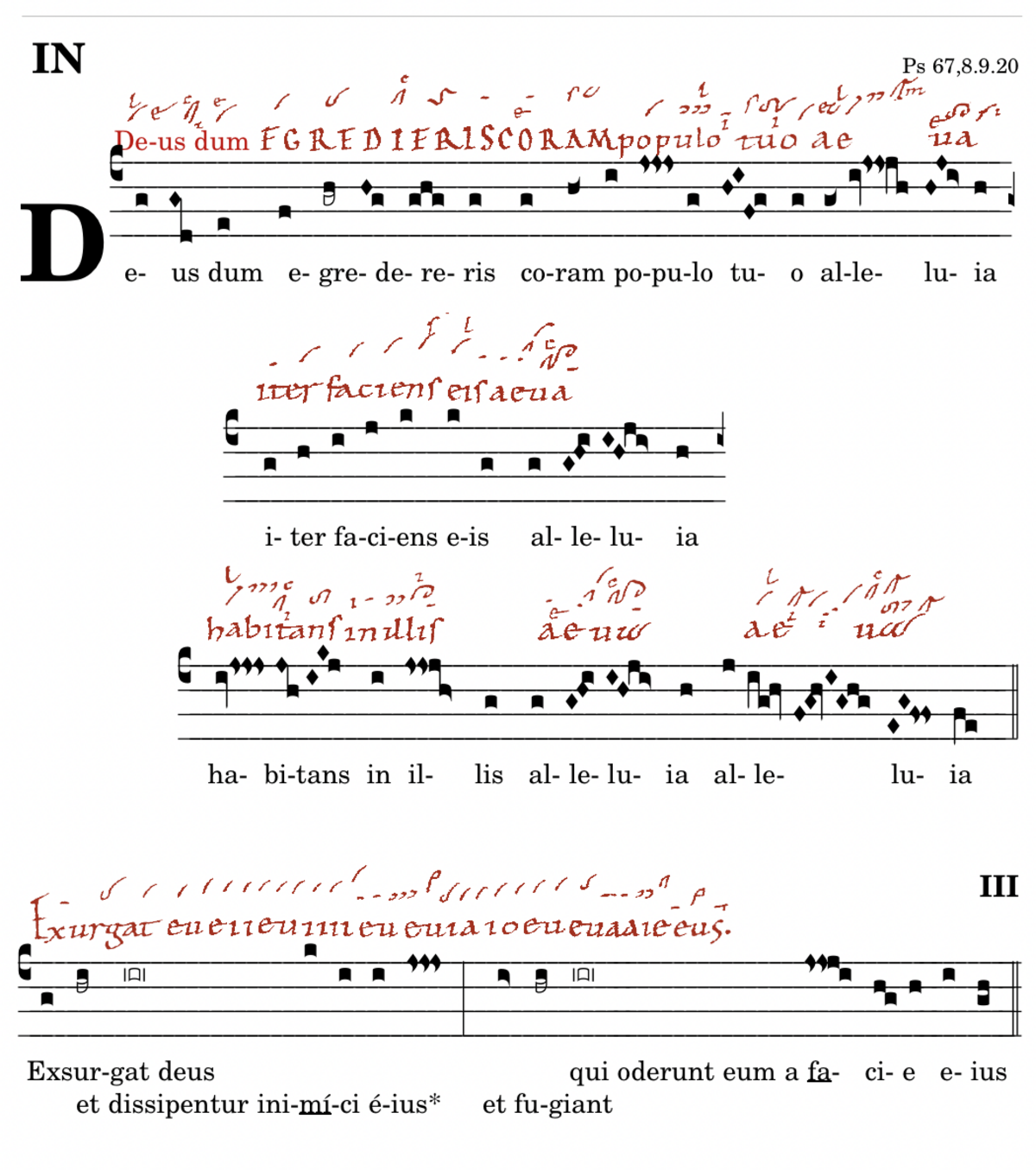
0020 IN Deus dum egredererisModus 3
0016 ⟽ IN 3 ⟾ 0029 xxx ⏹️xxx GT 244 - GrN 2/90 - BzG 56/16
QT Pent, die aufsteigende Tonleiter ist Kompositionsprinzip
„alleluia 2 + 3“ BvG 56, S.17f Nr.11,16.
frOc (Bv) - frOr (A+Y) im Spannungsfeld 3. Modus (si) - 8.Modus (do). Wir entscheiden uns für „si“ wegen der Graphien in L aber auch E (unvollkommene Diastemie innerhalb des PorFlx).
„alleluia 4“ Warum im si-do-Spiel dieses IN plötzlich am Schluss ein „sa“ auftauchen soll, ist unerklärlich. Es wäre eine verminderte Quint zur Finalis.
 IN3 katab
Tonleiter TT aufwärts
x
x
x
F
Gott, als du deinem Volke voranzogst, Halleluja,
hast du ihnen den Weg bereitet, Halleluja,
und hast bei ihnen gewohnt,
Halleluja, Halleluja.

God, when you went before your people, Hallelujah,
you prepared the way for them, Hallelujah,
and you dwelt among them, Hallelujah, Hallelujah.
QT Pent, the ascending scale is the compositional principle
“alleluia 2 + 3” BvG 56, p.17f No.11,16.
frOc (Bv) - frOr (A+Y) in the field of tension 3rd mode (si) - 8th mode (do). We opt for “si” because of the notation in L but also in E (imperfect diastema within the PorFlx).
“alleluia 4” Why this IN should suddenly appear as a “sa” at the end in the si-do interplay is inexplicable. It would be a diminished fifth to the final.