Dies ist eine alte Version des Dokuments!
🔘 IN GR TR AL OF CO xxxxx 1️⃣ 2️⃣ 3️⃣ ✅ 5️⃣ 6️⃣ 7️⃣ 8️⃣ xxxxx AN RP IV alia
0900 OF Tui sunt caeli V1Modus 4
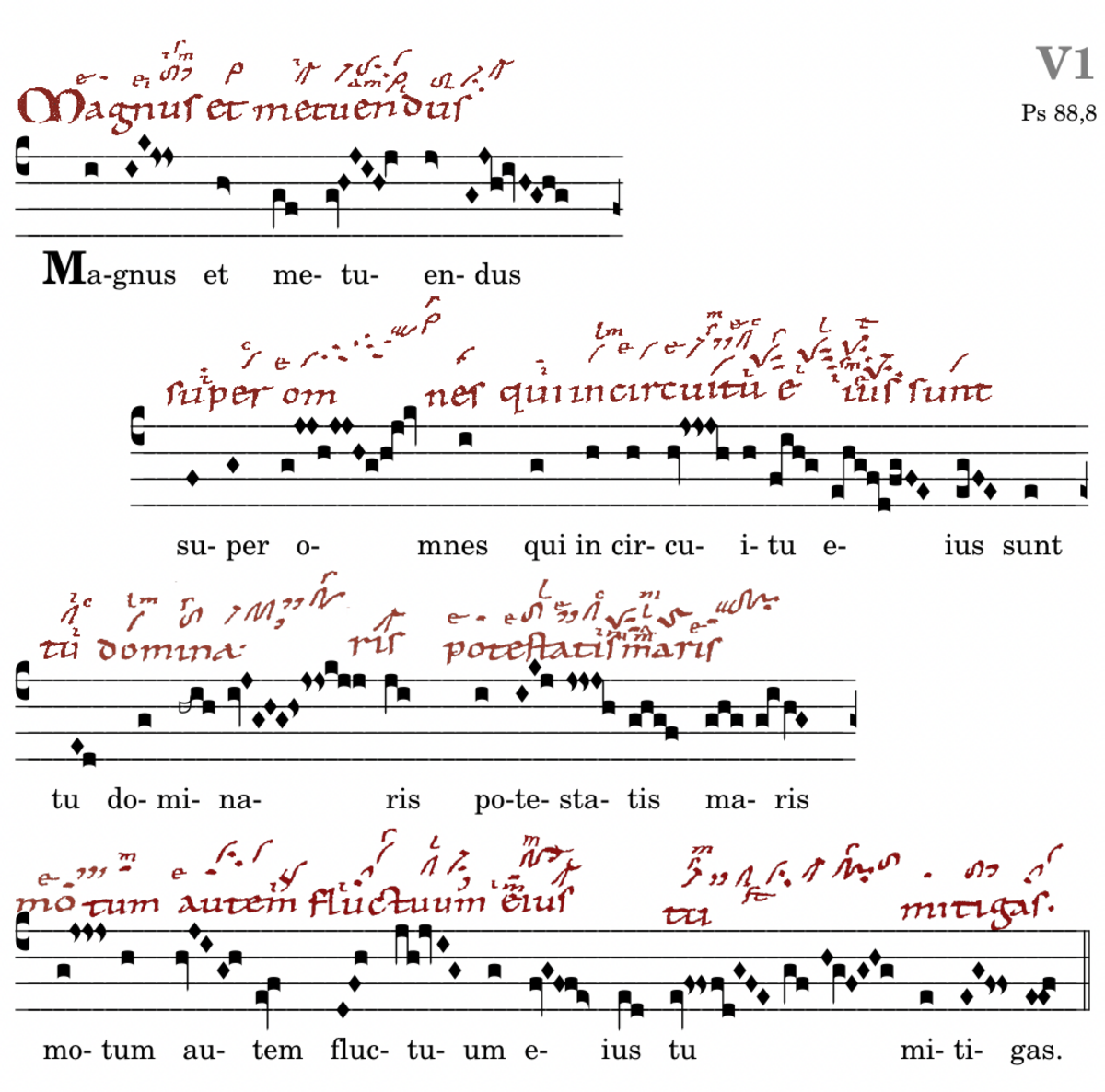
OF – V1 – V2 – V3 xxx ⏹️ xxx OT 19 - ON xx - BzG 68/22„Magnus“ Die CAD dt: beginnt nur im Tritus mit „fa“, die Halbtonspannung ist für den Deuterus konstitutiv. In den Quellen steht die älteste Schicht (frOr: E, A) gegen eine jüngere (10.Jh) Entwicklung (frOc, Bv, Y). Die hier verwendete Neume (CAD dt:) lebt die si-do-Spannung. Eine mögliche Deutung: Als Wortausdeutung des Adjektivs „Magnus“ wird sie aber schon im 10.Jh umgedeutet zu „do-do“. Die litterae in MR und Ch ('sursum', 'sursum equaliter' weisen darauf hin, dass hier etwas ungewöhnliches vollzogen wird.
„circui-tu“ kein si-be-molle: Mp notiert „sol-si-be-molle“. Auffällig ist die melodische Differenz zwischen A (sol-si) und Y (la-do). Kl als prominentester Vertreter der do-Revision weicht mit den ersten beiden Tönen auf „sol-do“ aus und bestätigt somit indirekt E: einerseits mit dem „inferius“ unterhalb des ersten Tons und andererseits mit dem „levare“ oberhalb des zweiten Tons.
„ma-ris“ Auch hier gibt Kl einen Hinweis auf das „si-naturale“; vgl. auch den Kontext: nachfolgendes do auf „mo-tum“!
Vgl. zur Thematik des „si-naturale“ auch den Jubilus des AL 4*.
V1. Groß und Furcht gebietend
ist er über alle um ihn her.
Du beherrschst das ungestüme Meer;
wenn sich seine Wogen erheben, so stillst du sie.

V1 He is great and awesome over all around him.
You rule the impetuous sea;
when its waves rise, you calm them.
“circui-tu” not B flat minor: Mp notes “G-B flat minor.” The melodic difference between A (sol-si) and Y (la-do) is striking. Kl, as the most prominent representative of the do revision, deviates with the first two notes to “sol-do” and thus indirectly confirms E: on the one hand with the ‘inferius’ below the first note and on the other hand with the “levare” above the second note. “ma-ris” Here, too, Kl gives an indication of the “si-naturale”; cf. also the context: subsequent do on “mo-tum”!
On the subject of the “si-naturale,” cf. also the jubilus of AL 4*.