🔘 IN GR TR AL OF CO xxxxx 1️⃣ 2️⃣ 3️⃣ ✅ 5️⃣ 6️⃣ 7️⃣ 8️⃣ xxxxx AN RP IV alia
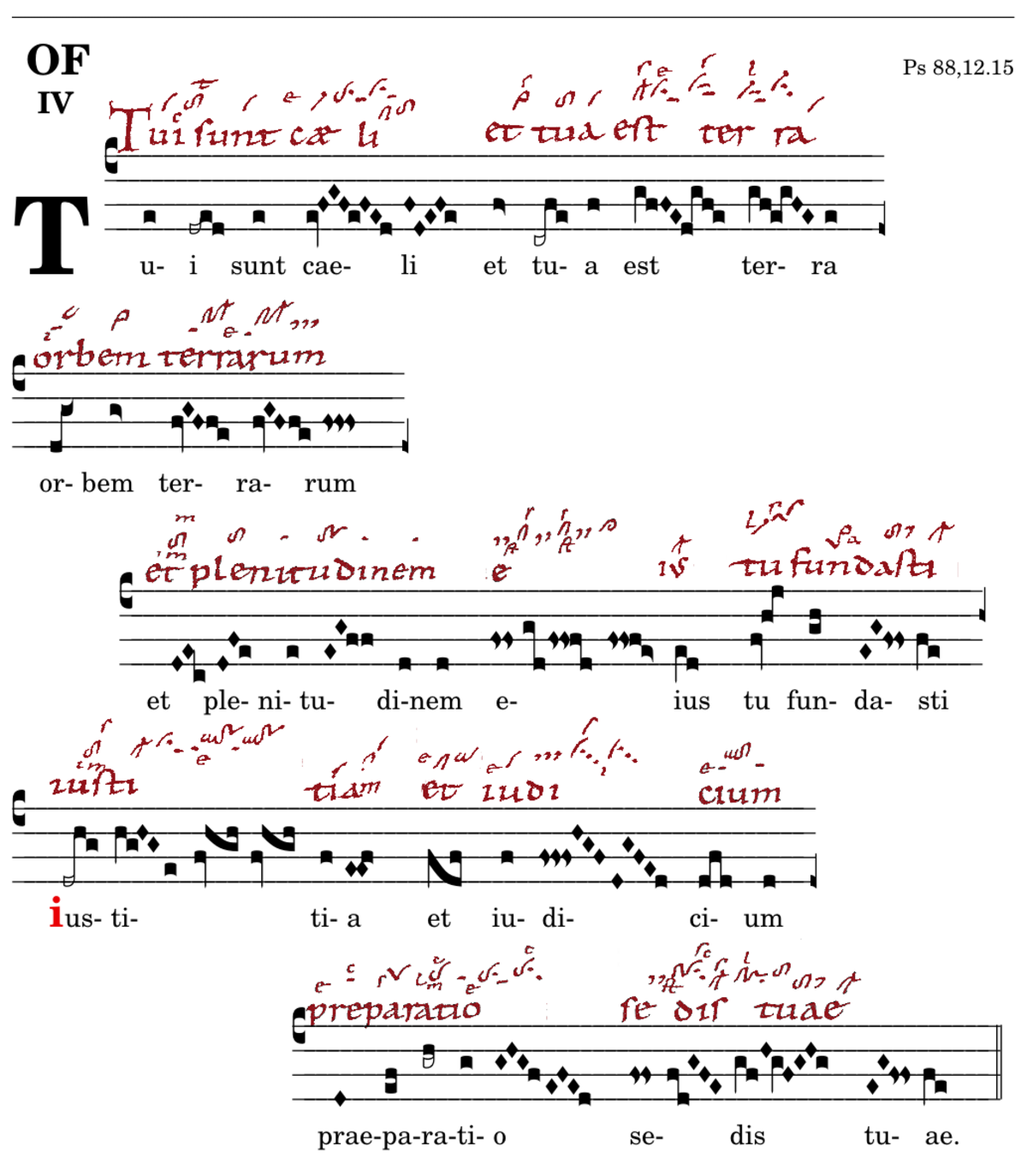
0590 OF Tui sunt caeliModus 4
OF – V1 – V2 – V3 xxx ⏹️ xxx GT 49 - GN 1/31 - BzG 22/23
„ter-ra-rum“ Wir plädieren doch für „mi“. L und Ch nicht eindeutig so oder so.
„ius-titia“ Der Intonations-Torculus ist in unserer Schreibgewohnheit grundsätzlich mit Quartanstieg, das ìnferius mediocriter' in E bestätigt das. Im Anschluss an den finalen Salicus „mi-mi-fa“ des 1. und 2. Verses ist die Quint „re-la“ logischer zu singen. In allen Hss ist der Intonations-Torculus auf der Silbe „ius“ zur Clv reduziert. Einzig Kl notiert einen Quintanstieg „re-la“.
Dein ist der Himmel, dein auch die Erde / den Erdkreis und was ihn erfüllt hast du gegründet.
Recht und Gerechtigkeit sind die Grundfeste deines Thrones.

Thine are the heavens, thine is the earth / the world and all that fills it thou hast established.
Justice and righteousness are the foundations of thy throne.
“ter-ra-rum” We argue for “mi.” L and Ch are not clearly one way or the other.
“ius-titia” In our writing habit, the intonation torculus is generally with a fourth rise, which is confirmed by the ìnferius mediocriter' in E. Following the final salicus “mi-mi-fa” of the 1st and 2nd verses, it is more logical to sing the fifth “re-la.” In all manuscripts, the intonation torculus on the syllable “ius” is reduced to Clv. Only Kl notes a fifth rise “re-la.”