🔘 IN GR TR AL OF CO xxxxx 1️⃣ 2️⃣ 3️⃣ 4️⃣ 5️⃣ 6️⃣ ✅ 8️⃣ xxxxx AN RP IV alia
0690 CO Nemo te condemnavit 1Modus 7
0689 ⟽ CO 7 ⟾ 0692 xxx ⏹️ xxx GR 124 - BzG 26/18 - GN 94
Benevent und Aquitanien setzten die Communio in den 8. Modus mit starker Tendenz zum 3. Modus, Mp + Zt setzen sie in den 2. Modus.
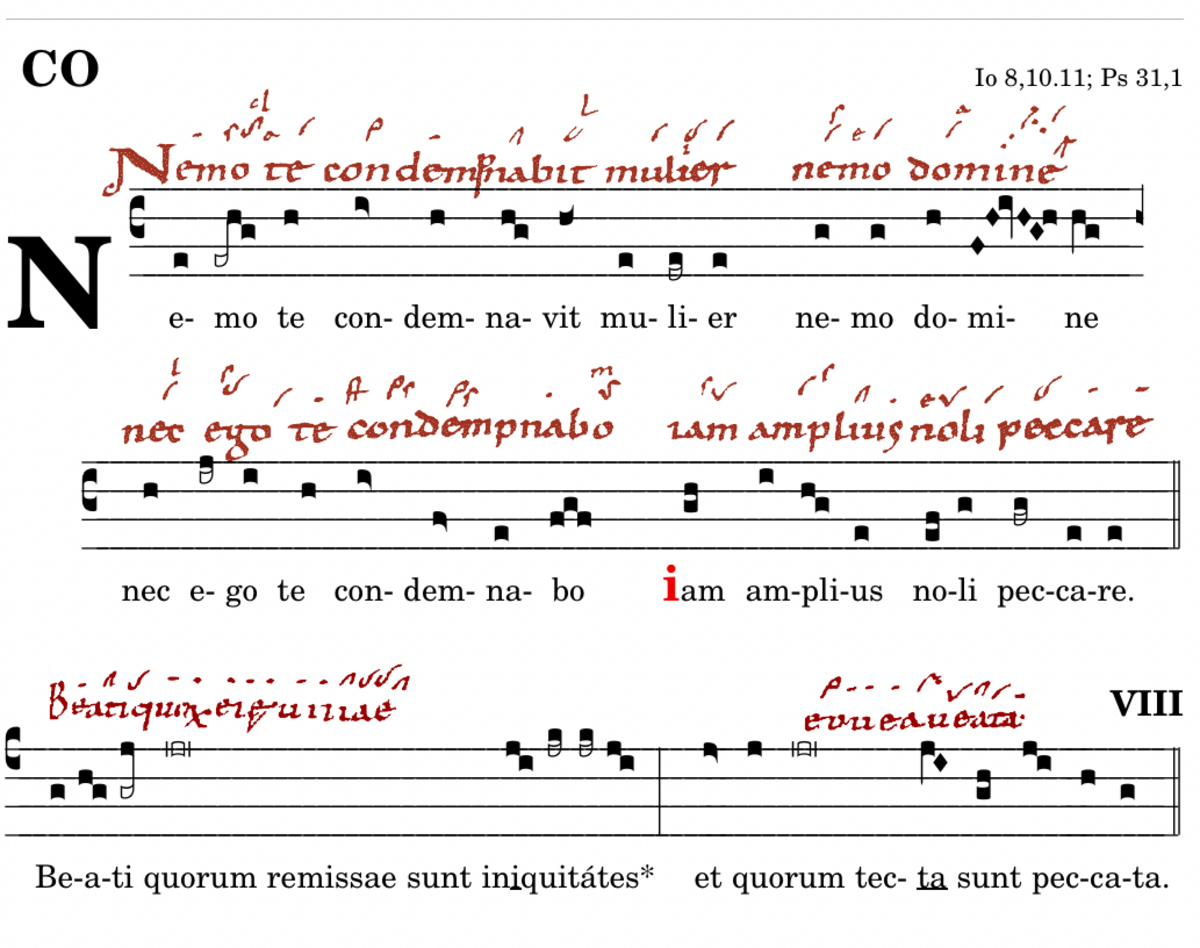
„Nemo te“ Cento TrcINT – Kl, Mod und alle adiatematischen Quellen belegen den TrcINT. E setzt ungewöhnlicherweise vor den Trc ein sursum: Trc „la-do-si“. Ist das Vermeiden der Tonwiederholung in E Einfluss der do-Revision? Keine diastematische Handschrift spricht gegen einen unisonischen Anschluss nach dem praetonischen „sol“ auf „Ne-mo“.
Oder soll das Vermeiden des unisonischen Anschlusses die Anrede Jesu an die Frau weniger direkt, intimer gestalten?
„Nemo domine“ Einfludd der do-Revision: L, MR noch „si“, Ch bereits „do“ wie die späten Quellen Kl, Mod. E notiert mit 'equaliter' und 'altius'ebenso Rezitzation “si“. Das 'sursum' darf nicht als Hinweis auf “do“ verstanden werden.
Keiner hat dich verurteilt, Frau? - Keiner, Herr.
Dann verurteile ich dich auch nicht! [Geh, und] sündige von nun an nicht mehr!

No one has condemned you, woman? - No one, Lord.
Then I don't condemn you either! [Go, and] sin no more from now on!
Benevento and Aquitaine place the Communio in the 8th mode with a strong tendency towards the 3rd mode; Mp + Zt place it in the 2nd mode.
‘Nemo te’ Cento TrcINT – Kl, Mod and all diastematic sources attest to the TrcINT. Unusually, E places a sursum before the Trc: Trc ‘la-do-si’. Is the avoidance of note repetition in E an influence of the do revision? No diastematic manuscript argues against a unison connection after the praetonian ‘sol’ to ‘Ne-mo’.
Or is the avoidance of the unison connection intended to make Jesus’ address to the woman less direct, more intimate?
‘Nemo domine’ Influence of the do revision: L, MR still “si”, Ch already ‘do’ as in the late sources Kl, Mod. E notated with “equaliter” and “altius”, likewise recitation “si”. The “sursum” must not be understood as an indication of “do”.