🔘 IN GR TR AL OF CO xxxxx 1️⃣ 2️⃣ 3️⃣ ✅ 5️⃣ 6️⃣ 7️⃣ 8️⃣ xxxxx AN RP IV alia
0559 OF Laetentur caeliModus 4
OF – V1 – V2 xxx ⏹️ xxx GT 44 - GN 1/23 - BzG 22/11
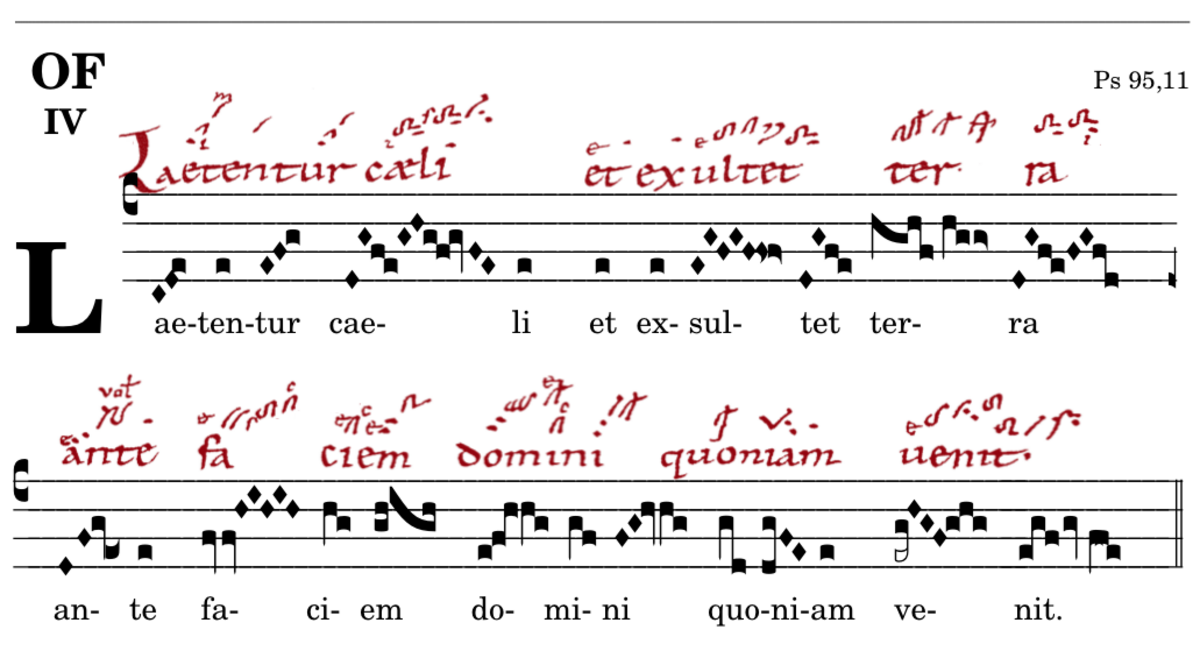
„exsul-tet“ Die diastematischern Quellen bieten für den ersten Ton „re, mi, fa“ an. Das 'sursum' in Ch spricht gegen „re“, bleiben Bv „mi“ und A „fa“. Auch die Parallelstelle im 2. Vers „saluta-re“ hilft nicht wirklich bei der Entscheidung (hier A+Y „re“). Aber das völlige Fehlen der Lösung „fa“ (außer Kl do-Revision) lässt die Entscheidung gegen A und für Bv „mi“ fallen.
„fa-ciem“ Die Melodie führt zum „si“ Die Regel Agustonis „si“ im Bezug zu „do“, „sa“ als Wechselnote zum „la“ gilt für den 1. Modus, nicht für den Tritus. 5. Modus immer „si“, vor allem in Bezug zum folgenden „mi“ bei „dominus“.
Die Himmel sollen sich freuen / die Erde soll frohlocken

vor dem Angesicht des Herrn: Denn er kommt!

Let the heavens rejoice / let the earth be glad
before the presence of the Lord: for he is coming!
“exsul-tet” The diastematic sources suggest “re, mi, fa” for the first note. The ‘sursum’ in Ch argues against “re,” leaving Bv ‘mi’ and A “fa.” The parallel passage in the second verse “saluta-re” does not really help with the decision either (here A+Y “re”). But the complete absence of the solution ‘fa’ (except for Kl do revision) leads to the decision against A and in favor of Bv “mi.”
“fa-ciem” The melody leads to “si.” Agustoni's rule “si” in relation to “do,” ‘sa’ as an alternating note to “la” applies to the 1st mode, not to the tritus. 5th mode always “si,” especially in relation to the following ‘mi’ in “dominus.”