🔘 IN GR TR AL OF CO xxxxx ✅ 2️⃣ 3️⃣ 4️⃣ 5️⃣ 6️⃣ 7️⃣ 8️⃣ xxxxx AN RP IV alia
0045 IN Ego autem cum iustitiaModus 1
0036 ⟽ IN 1 ⟾ 0046xxx ⏹️ xxx GT 94 - GrN 1/285 - BzG 41.42/222️⃣ AB EF
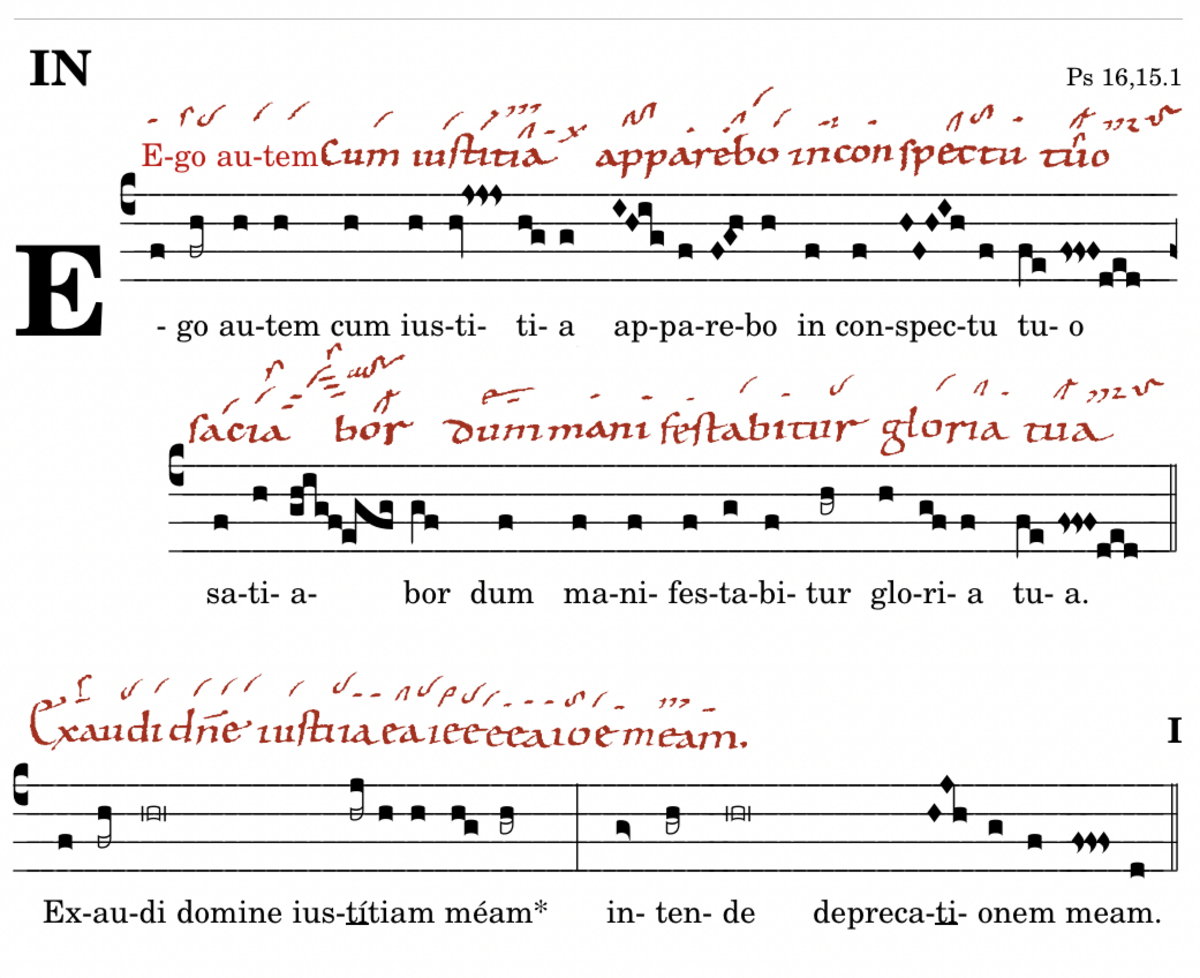
„É-go“ FML alloq Das 'sursum' zum ersten Ton des Pes in E wird als spätere Entwicklung verstanden und deshalb negiert. Oder soll es das selbstbewusste „Égo“ des Bittenden in Ps 16(17) entschärfen? MR und L sprechen für unisonischen Anschluss zur ersten Silbe, nicht so Ch.
Dreimal si-be-durum!
„áp-parebo“ „si“ eingebettet in „do“ und „sol“, Kl “do“ kein Problem hier “si“ zu singen. GN klammert sein “b“ ein!
cf 0046 „con-spéc-tu“ Mp „si“,Kl “do“. FML circulatio, der untere Ton der FML ist in allen diastematischen Quellen ein „fa“, eine Variante, die innerhalb der mündlichen Tradition ohne speziellen Grund nicht denkbar ist. Wenn aber der Endton der Circulatio “sol“ sein muss (Änderung der Ténorebene zum “sol“), hat der tiefste Ton „sol“ seine Berechtigung. Die fallende Linie „si-la-sol-fa-re“ - hat als Textausdeutung ihren Sinn: „apparebo in conspectu tuo“.
„sati-á-bor“ „si“ reine Quint zum „mi“, E 'sursum' zum Gipfelton.
Kl alle dreimal „do“, Zt alle dreimal „sa“, Mp einmal „si“, zweimal „sa“., das heißt, das GN bleibt in der Tradition von Mp.
Der Text diese IN spricht strahlend von Gerechtigkeit, erscheinen, gesättigt sein, nicht von Erniedrigung, verborgen sein oder Hunger. Warum weisen die Bz 41/42 hier nicht auf Kl hin?
Ich aber, in Gerechtigkeit werde ich erscheinen /
vor deinem Angesicht,
ich werde gesättigt werden /
wenn sich mir deine Herrlichkeit offenbaren wird.

But I, in righteousness I will appear before your face,
I will be satisfied / when your glory is revealed to me
“É-go” FML alloq The ‘sursum’ to the first note of the Pes in E is understood as a later development and is therefore negated. Or is it intended to defuse the self-confident “Égo” of the supplicant in Ps 16(17)? MR and L advocate for a unison connection to the first syllable, unlike Ch.
Three times si-be-durum!
“áp-parebo” “si” embedded in “do” and “sol,” Kl ‘do’ no problem singing “si” here. GN brackets his “b”!
“con-spéc-tu” Mp “si”, Kl ‘do’. Circulatio, the lower note of the FML is a “fa” in all diastematic sources, a variant that is inconceivable within the oral tradition without a specific reason. However, if the final note of the circulatio must be “sol” (change of the tenor level to “sol”), the lowest note ‘sol’ is justified. The falling line “si-la-sol-fa-re” makes sense as an interpretation of the text: “apparebo in conspectu tuo”.
“sati-á-bor” ‘si’ pure fifth to “mi”, E ‘sursum’ to the summit note.
Kl all three times “do”, Zt all three times “sa”, Mp once ‘si’, twice “sa”, i.e., the GN remains in the tradition of Mp.
The text of this IN speaks radiantly of justice, appearing, being satiated, not of humiliation, being hidden or hunger. Why do Bz 41/42 not refer to Kl here?