🔘 IN GR TR AL OF CO xxxxx 1️⃣ 2️⃣ 3️⃣ ✅ 5️⃣ 6️⃣ 7️⃣ 8️⃣ xxxxx AN RP IV alia
1014 OF Factus est dominus V2Modus 4
OF – V1 – V2 xxx ⏹️ xxx OT43 - ON xx - BzG 76/15
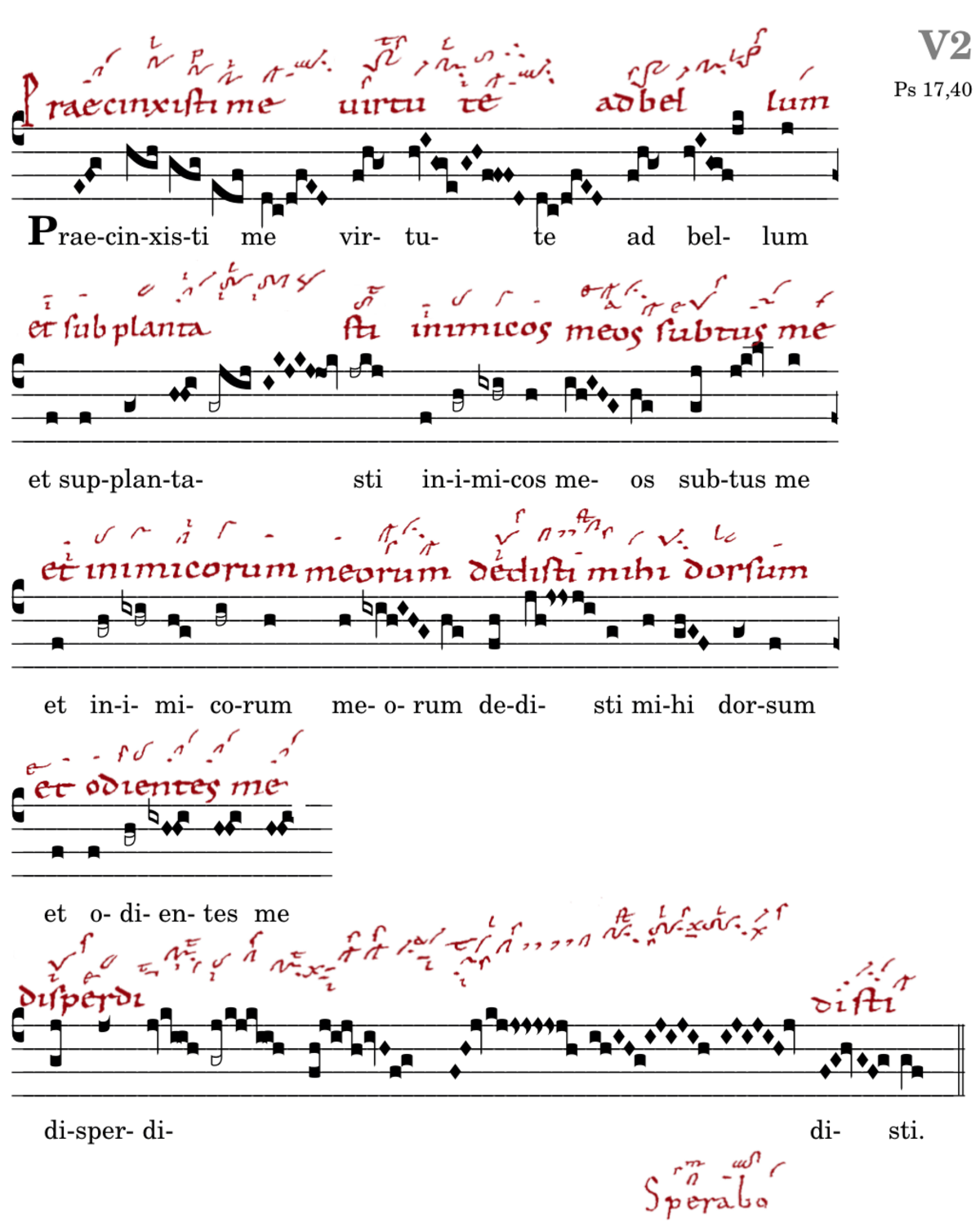
„vir-tú-te“ Der verminderte Dreiklang “sa-sol-mi“ ist unmöglich, vor allem bei dem Text “virtute”. Daher “si” ! Kl ad “do”.
„ad bél-lum“ Es ist nachvollziehbar, dass Kl bei der Wiederholung der Formel, nun aber nicht zum “mi” sondern zum “fa”, unsicher wird, kalte Füße bekommt, und zum “sa” verändert. Aber die Wiederholung und die Wortausdeutung “bellum” spricht für “si”. Die Musiktheorie des Hochmittelalters und die Angst vor dem 'diabolus in musica', dem Tritonus, hat nichts mit dem Frühmittelalter zu tun.
„supplan-tás-ti“ Das “si” steht im Sog des folgenden “do”.
„in-i-mi-co-rum“ Die VStr weist auf “sa“ hin, ebenso die Wortausdeutung.
V2. Umgürtet hast du mich mit Kraft für den Krieg / und meine Feinde ließest du unter mich fallen,
und den Rücken meiner Feinde hast du mir gegeben / und die mich hassen, hast du vernichtet.

V2. You have girded me with strength for war / and you have let my enemies fall under me,
and you have given me the backs of my enemies / and you have destroyed those who hate me.
“vir-tú-te” The diminished triad “sa-sol-mi” is impossible, especially with the text “virtute.” Therefore, “si”! Kl ad “do.”
“ad bél-lum” It is understandable that Kl, when repeating the formula, now not to ‘mi’ but to “fa,” becomes uncertain, gets cold feet, and changes to “sa.” But the repetition and the interpretation of the word “bellum” speak in favor of “si.” The music theory of the High Middle Ages and the fear of the “diabolus in musica,” the tritone, has nothing to do with the Early Middle Ages.
“supplan-tás-ti” The ‘si’ is in the wake of the following “do.”
“in-i-mi-co-rum” The VStr points to “sa,” as does the interpretation of the word.