🔘 IN GR TR AL OF CO xxxxx 1️⃣ 2️⃣ 3️⃣ 4️⃣ 5️⃣ 6️⃣ 7️⃣ ✅ xxxxx AN RP IV alia
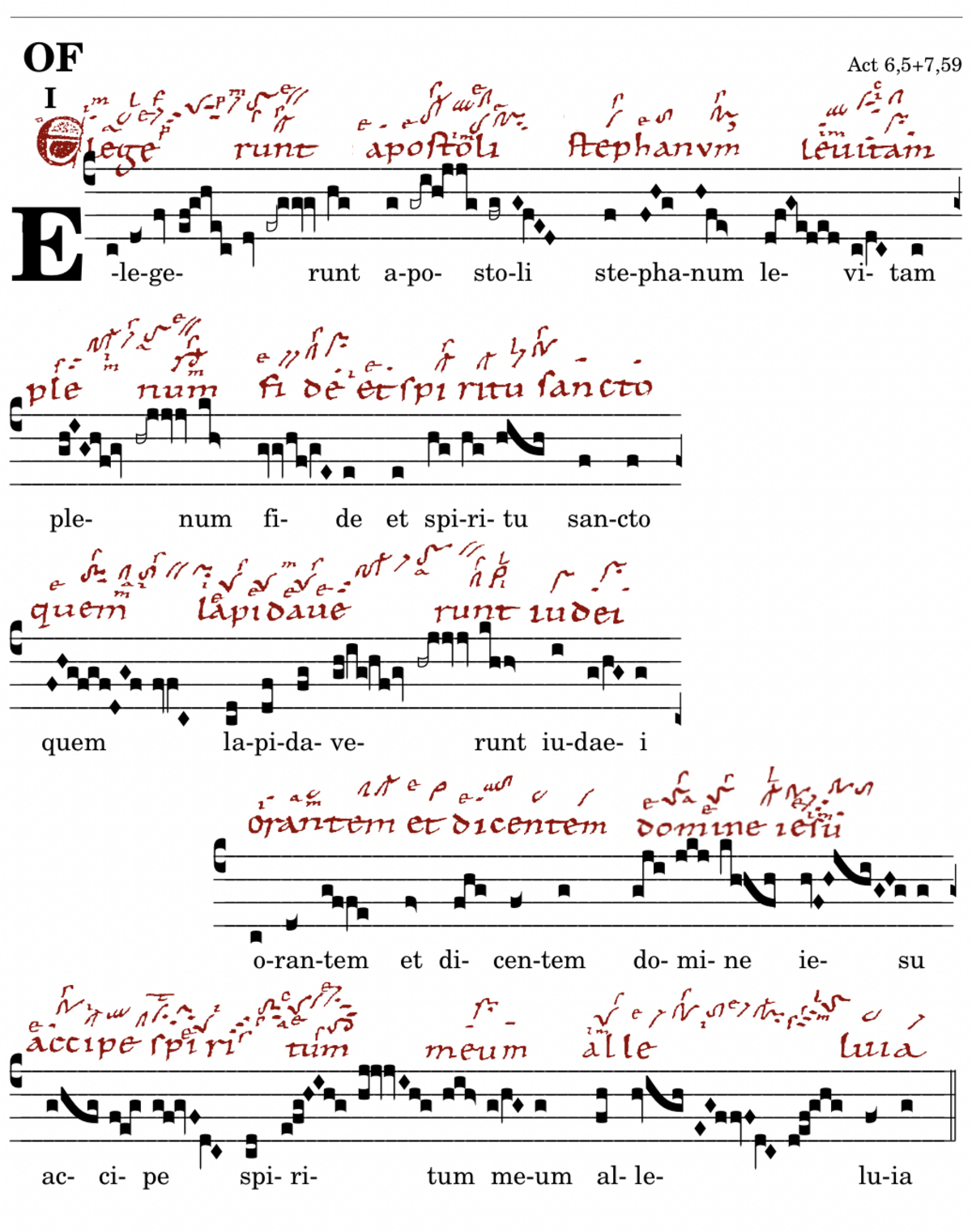
0525 OF Elegerunt apostoliModus 8
OF – V1 – V2 – V3 xxx ⏹️ xxx GT 634 - GN 1/406 - BzG 36/10
 „iu-dae-i“ und „me-um“ Kl bestätigt unsere Graphie des ~Trc.
„ie-su“ Die Frage ist, ob die Resupin-Virga der Prr-Graphie resupin (FrR) oder unisonisch ist (GrN). In Kl fehlt für die unisonische Lösung 1 Ton. Das 'inferius mediocriter' in E spricht für “sol“ als zweiter Ton der Neume.
„spiritu“ Wie soll man 'sursum' auf dem ersten Ton der Porrectus-Graphie anders lesen denn als Hinweis auf „si-be-durum“?
Es wählten die Apostel Stephanus / einen Leviten voll des Glaubens und heiligen Geistes.
Den steinigten die Juden; er [aber] betete und sagte: Herr Jesus, nimm meinen Geist hin!
Halleluja.

The apostles chose Stephen / a Levite full of faith and the Holy Spirit.
The Jews stoned him, but he prayed and said, "Lord Jesus, take away my spirit!
Hallelujah.
“iu-dae-i” and “me-um” Kl confirms our spelling of ~Trc.
“ie-su” The question is whether the resupin virga of the Prr notation is resupin (FrR) or unisonic (GrN). In Kl, 1 tone is missing for the unisonic solution. The ‘inferius mediocriter’ in E argues for “sol” as the second tone of the neume.
“spiritu” How else can one read ‘sursum’ on the first tone of the Porrectus notation other than as a reference to “si-be-durum”?