🔘 IN GR TR AL OF CO xxxxx 1️⃣ 2️⃣ 3️⃣ 4️⃣ 5️⃣ 6️⃣ 7️⃣ ✅ xxxxx AN RP IV alia
0511 OF Deus enim firmavitModus 8
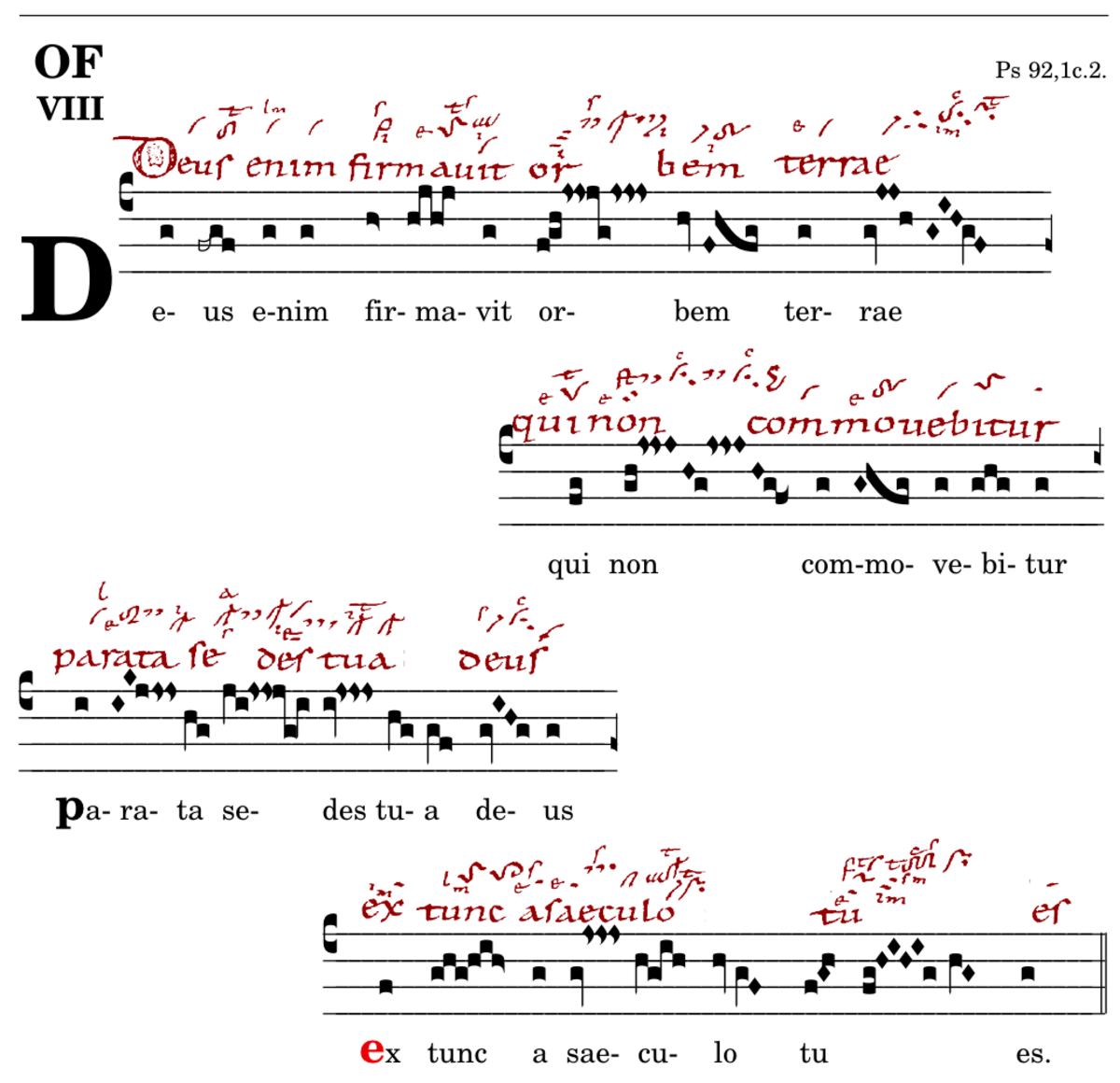
OF – V1 – V2 xxx ⏹️ xxx GT 46 - GN 1/26 - BzG 22/18BzG 68 revidiert BzG 22 zurück zum si-be-molle und beruft sich dabei vor allem auf Pothier! Der tiefere Grund für diese Re-revision ist nicht nachvollziehbar. Der 8. Modus hat grundsätzlich kein si-be-molle. Eine modale Centonisation liegt nicht vor, höchstens sind Teile der Melodie als 5. Modus zu interpretieren, ebenfalls absolut ohne si-be-molle! Die Circulatio „tunc“ und „sae-cu-lo“ ist mit einem Halbton oben nicht vorstellbar!
 „se-des“ Die Clv in Bv Terz (so-la), in A+Y Sekund (do-si). Weitere Zeugen sagen dazu nichts aus, nur E. Die beiden nkClv „para-ta“ mit zuvor inferius (la-sol), und „se-des“ darüber „altius“ und unter dem zweiten Ton „sursum“ lässt eigentlich nur eine SecundClivis zu (do-si).
„se-des“ Obwohl keine andere Quelle es beweist, ist das „equaliter“ in E ernst zu nehmen: Das Ende der Porrectusbewegung „do-sol-si/do“ ist unisonisch mit dem nachfolgenden Tractulus, der als Note vor dem Strophicus nicht unisonisch mit diesem sein kann. Daher „do-sol-si“.
„se-des“ Die artikulatorische Revision des Pes sbp in BzG 68 im Vergleich zu BzG 22 wird zwar dem anfangsartikulierten „sol“ gerecht, ignoriert aber aufgrund der traditionell unterschiedslosen Schreibkonvention der Clm-Bewegung das „celeriter“ auf der Vrg „si“.
Gott nämlich hat den Erdkreis fest gegründet / nie wird er wanken.\\
Dein Thron steht fest von Anbeginn, Gott / du bist seit Ewigkeit!

For God has firmly established the earth / it will never waver.\\
Your throne has stood firm from the beginning, God / you have been from eternity!
BzG 68 revises BzG 22 back to B-flat minor, citing Pothier in particular! The underlying reason for this re-revision is unclear. The 8th mode does not generally have a B-flat minor. There is no modal centonisation; at most, parts of the melody can be interpreted as the 5th mode, also absolutely without B flat minor! The circulatio “tunc” and “sae-cu-lo” is inconceivable with a semitone above!
„se-des“ The Clv in Bv third (so-la), in A+Y second (do-si). Other witnesses say nothing about this, only E. The two nkClv “para-ta” with inferius (la-sol) before, and “se-des” above ‘altius’ and below the second tone “sursum” actually only allows for a SecundClivis (do-si).\
„se-des“ Although no other source proves it, the ‘equaliter’ in E must be taken seriously: the end of the porrectus movement “do-sol-si/do” is in unison with the following tractulus, which, as a note before the strophicus, cannot be out of unison with it. Hence “do-sol-si”.
“de-us” The articulatory revision of the Pes sbp in BzG 68 compared to BzG 22 does justice to the initially articulated “sol,” but ignores the ‘celeriter’ on the Vrg “si” due to the traditionally undifferentiated writing convention of the Clm movement.