🔘 IN GR TR AL OF CO xxxxx 1️⃣ ✅ 3️⃣ 4️⃣ 5️⃣ 6️⃣ 7️⃣ 8️⃣ xxxxx AN RP IV alia
0148 IN SitientesModus 2
0137 ⟽ IN 2 ⟾ 0153 xxx ⏹️ xxx GT 114 - GN 1/298 - BzG 43/212️⃣ AB - EF
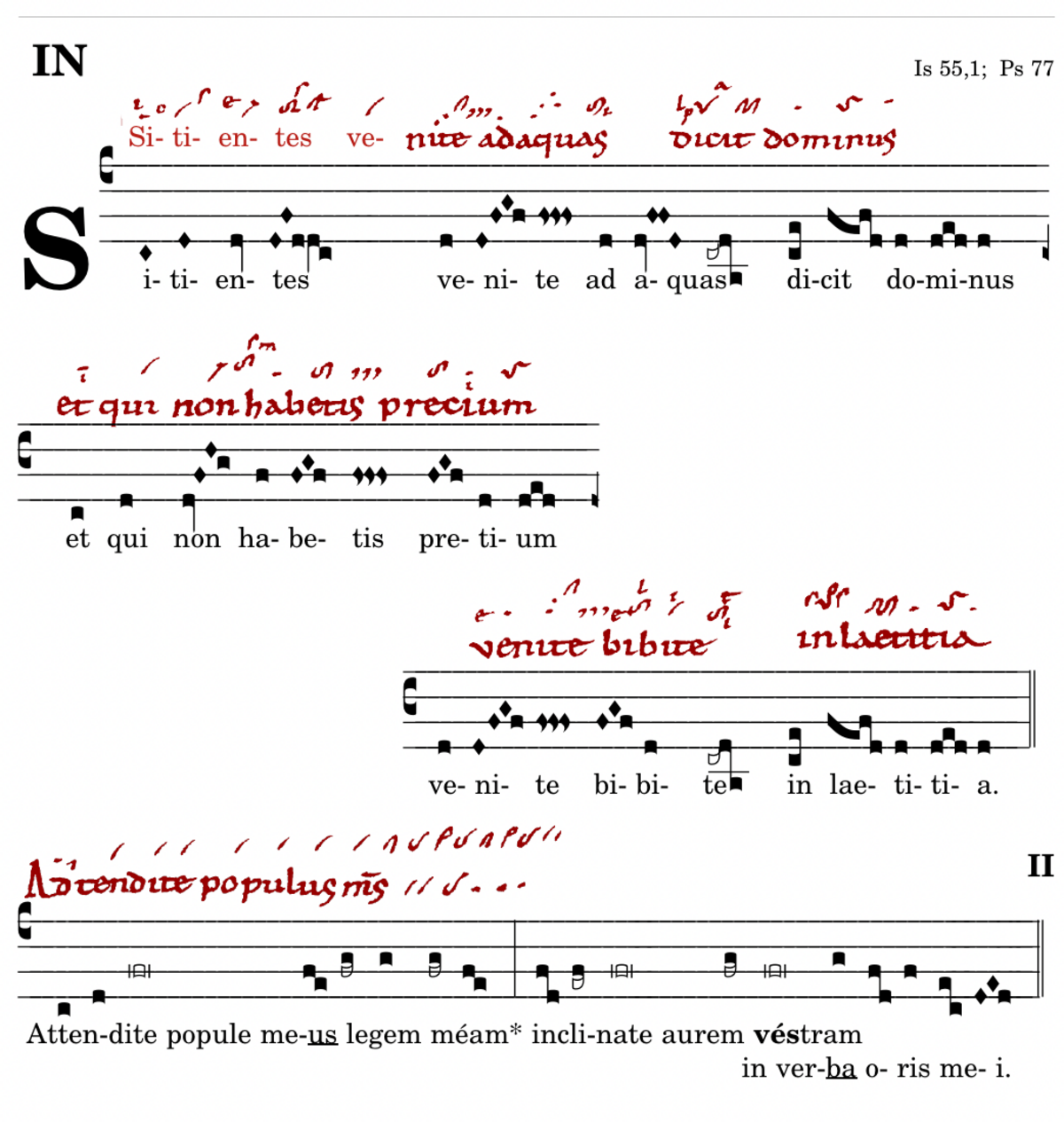
2 Perioden, der größere zweite Teil der Perioden ist parallel komponiert und besteht aus
• „veníte“ kScaFlx als milder Akzent mit Tristopha auf der Endsilbe.
„ad aquas“ - „bibite“ Katab.
„dicit dominus“ - „in laetitia“ nkPes „do-mi“ PrrFlx (Doppelclivis)treibt weiter ohne Betonung in den TrcFSE.
• „Sitientes“ Auftaktiges „do“ vor der Rezitation „re“. Auf der Endsilbe steht die klassische FML rever.
„et nón habétis prétium“ Nach auftaktigem „do -re“ rezitiert der Cento auf „fa“. Alle drei Akzente tragen Trc. „non“ ist ein ScaFlx der sich mit einer TrcGRAV-Figur zum „la“ hebt. Der Cento endet mit nkTrc auf „re“ (kein TrcFSE!).
Ihr Dürstenden / kommt her zum Wasser;
und die ihr kein Geld habt / kommt her und trinkt mit Freuden.

You who are thirsty / come to the water;
and you who have no money / come and drink with joy.
2 phrases; the longer second part of the phrase is composed in parallel and consists of
• ‘veníte’ kScaFlx as a mild accent with a tristopha on the final syllable.
‘ad aquas’ - „bibite“ Katab.
‘dicit dominus“ - ’in laetitia“ nkPes ‘do-mi’ PrrFlx (double clivis) continues without stress into the TrcFSE.
• ‘Sitientes“ An upbeat ’do‘ before the recitative “re”. The final syllable features the classical FML rever.
’et nón habétis prétium‘ Following the upbeat ’do -re‘, the Cento recites on ’fa“. All three accents carry Trc. ‘non’ is a ScaFlx that rises to “la” with a TrcGRAV figure. The Cento ends with nkTrc on ‘re’ (no TrcFSE!).