🔘 IN GR TR AL OF CO xxxxx ✅ 2️⃣ 3️⃣ 4️⃣ 5️⃣ 6️⃣ 7️⃣ 8️⃣ xxxxx AN RP IV alia
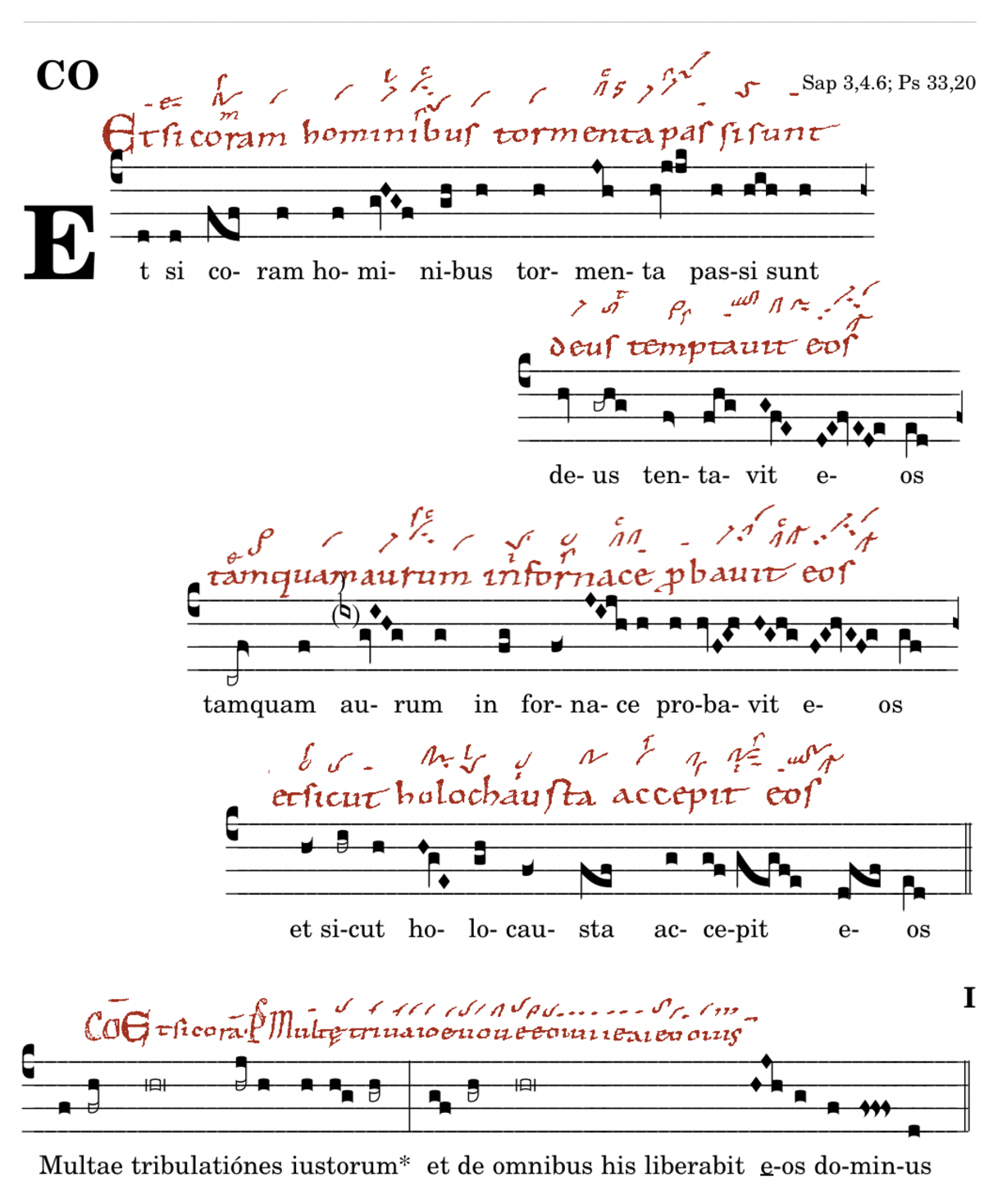
0648 CO Et si coram hominibusModus 1
0645 ⟽ CO 1 ⟾ 0655 xxx ⏹️ xxx GT 470 - GN 2/182 - BzG 58/652️⃣ AIB - EYF
1. PeriodexxxA re-la xxx I la-do-la xxx B la-re
1. PeriodexxxE fa-la xxx Y la-fa xxxxx F la-re
A
I TransponierteEmotionaler und melodischer Höhepunkt der CO „tormenta passi sunt“
B Der Cento endet mit CAD mega auf fa. Das Ende der 1. Periode ist die Hauptaussage der CO.
„tor-men-ta“ der applizierte Oriscus erklärt la zum Ténor und fixiert so den TrcFSE auf la.
E TrcINT „au-rum“ Das 'sursum' in E steht beim Gipfelton des PesSbp. „tamquam aurum in fornace probatus“ kann man schon eine gewisse Schärfe zuschreiben: “si“, wenn auch Kl nicht mit „do“ unterstützt.
Der Cento endet mit PrrFlx (Doppelclivis) auf do zum la und treibt damit weiter
Y la-fa „eos“ CAD mega auf fa.
F „eos“ CAD mikro auf re.
Und wenn sie auch in den Augen der Menschen / Qualen erlitten haben / Gott hat sie geprüft •/
Wie Gold im Schmelzofen / hat er sie erprobt / und sie angenommen als ein vollgültiges Opfer.

And even though they suffered torment / in the eyes of men / God proved them /
Like gold in a smelting furnace / he proved them / and accepted them as a sacrifice of full merit.
“au-rum” The ‘sursum’ in E is at the peak tone of PesSbp. “tamquam aurum in fornace probatus” can be attributed a certain sharpness: “si,” even if Kl is not supported by “do.”
“eos” CAD micro versus CAD mega.