🔘 IN GR TR AL OF CO xxxxx 1️⃣ 2️⃣ 3️⃣ 4️⃣ 5️⃣ 6️⃣ 7️⃣ ✅ xxxxx AN RP IV alia
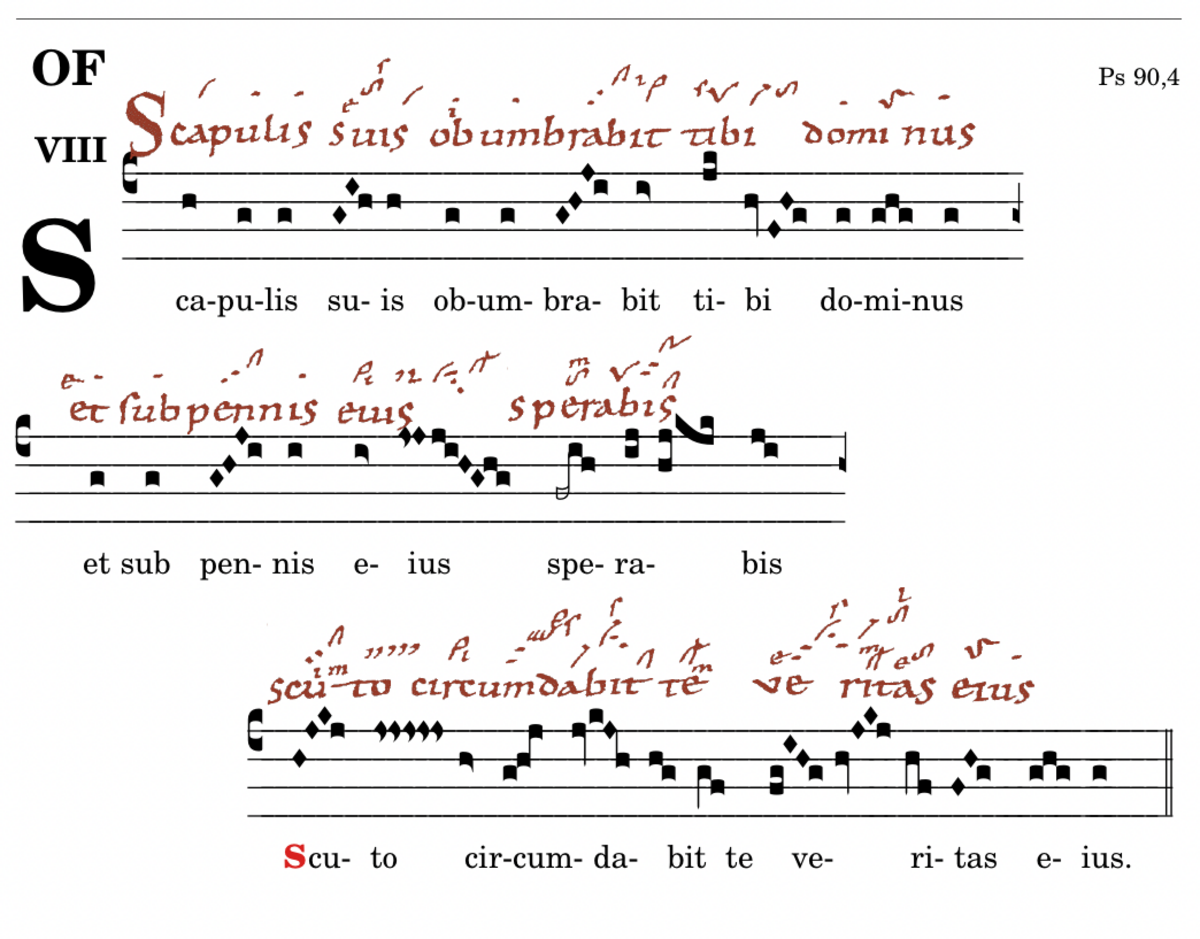
0582 OF Scapulis suisModus 8
OF – V1 – V2 – V3 xxx ⏹️ xxx GT 76 - GN 1/68 - BzG 24/25
„sub pen-nis e-ius“
„si si“ oder „si do“
si si: L, T1.
si do: Ch, T2, Bv33,34
E wegen der Cephalicusgraphie nicht eindeutig, ebenso MR nicht eindeutig,
Offensichtlich eine historische Entwicklung: T1 noch si, gegen T2 mit Bv schon do. Wie in den TR tetrardus zu zeigen war, hebt der Strophicus die Rezitation „si“ zum „do“. In jüngeren Quellen geschieht das bereits mit der Akzentsilbe.
„spe-rabis“ Der TrcINT (MR, Hinweis Ch), ist in allen anderen Quellen bereits zur Clv reduziert. Der leichte erste Ton ist entfallen. Wir notieren den TrcINT grundsätzlich mit Quart, der erste Ton ist so leicht, dass er ohnehin keinen Tonort bilden kann. Bestenfalls ist er ein Portamento.
„ve-ritas“ zum „si“ im Schatten des folgenden “do“. E 'sursum', Kl zum “do“
Mit seinen Schultern spendet der Herr dir Schatten / und unter seinen Flügeln wirst du voll Hoffnung sein.
Wie ein Schild umgibt dich seine Wahrheit.

With his shoulders the Lord gives you shade / and under his wings you will be full of hope.
His truth surrounds you like a shield.
“sub pen-nis e-ius”
“si si” or “si do”
si si: L, T1.
si do: Ch, T2, Bv33,34
E unclear due to cephalicusgraphy, MR also unclear,
Obviously a historical development: T1 still si, against T2 with Bv already do. As was shown in the TR tetrardus, the Strophicus raises the recitation “si” to “do.” In more recent sources, this already happens with the stressed syllable.
“spe-rabis” The TrcINT (MR, note Ch) is already reduced to Clv in all other sources. The light first tone has been omitted. We generally notate the TrcINT with a fourth; the first note is so light that it cannot form a noteort anyway. At best, it is a portamento.
“ve-ritas” to the ‘si’ in the shadow of the following “do.” E ‘sursum’, Kl to the “do.”