🔘 IN GR TR AL OF CO xxxxx 1️⃣ 2️⃣ ✅ 4️⃣ 5️⃣ 6️⃣ 7️⃣ 8️⃣ xxxxx AN RP IV alia
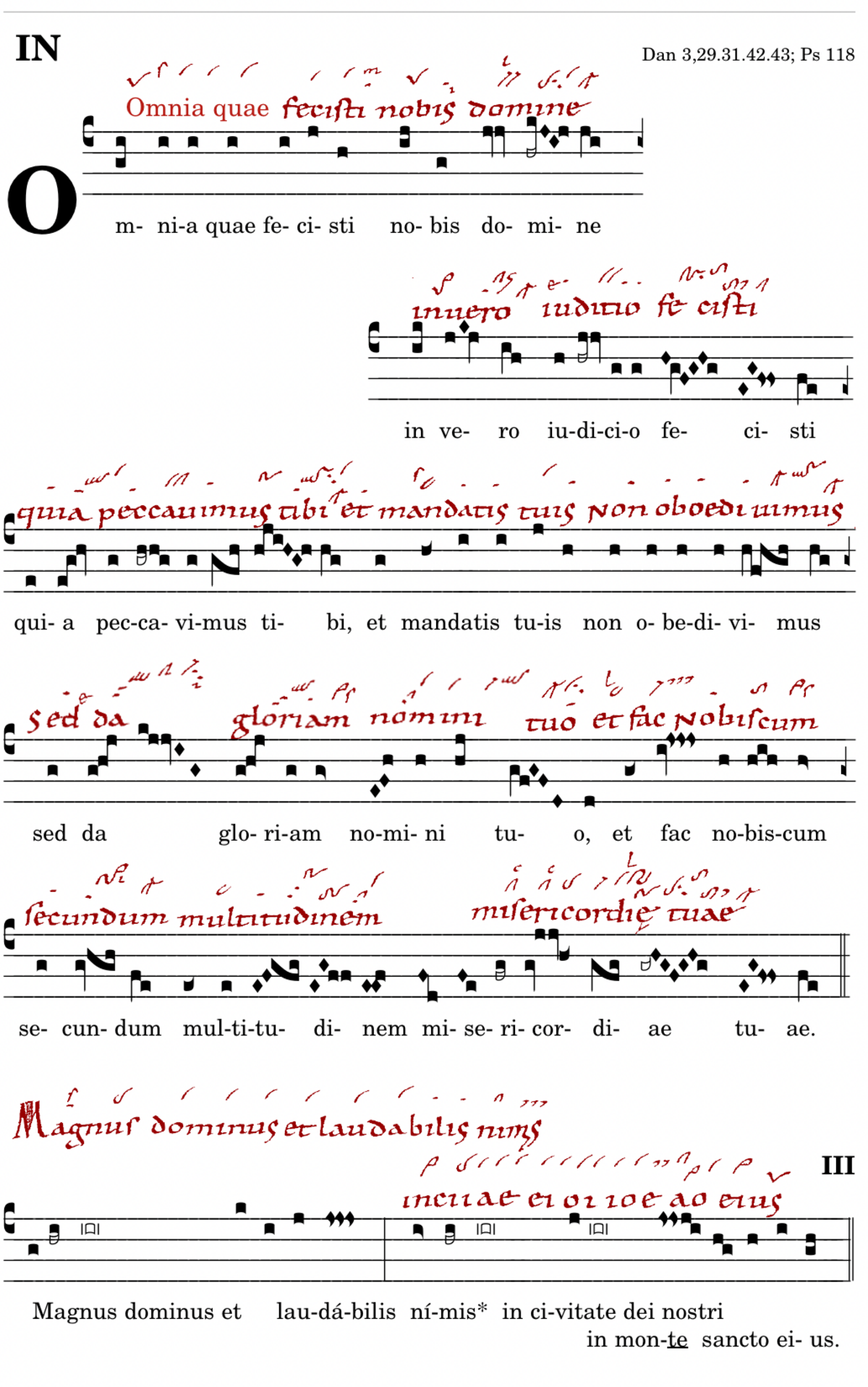
0116 IN Omnia quae fecistiModus 3
0113 ⟽ IN 3 ⟾ 0129 xxx ⏹️ xxx GT 342 - GrN 1/332 - BzG 44/29
„no-bis“ Alle Handschriften diastematisch und adiastematisch schreiben Bivirga, nur die St.Galler Familie gibt Pes an, aber Ausnahme: codex Milano IX.s 106v ebenfalls Bivirga.
Der Oriscus ist in diesem IN nur zweimal eingesetzt:
„in ve-ro iudicio“ etabliert er den Tenor do. Bei
„fe-cisti“ als Pressus als Einleitung einer FML Circ die Tenorebene la.
„quia peccavimus tibi“ Die CAD 8C wird nicht selten als FML Christologon verwendet.
Alles, was du uns tatest, Herr / hast du in gerechtem Urteil getan,
denn wir haben gesündigt gegen dich / und deinen Geboten nicht gehorcht.
Aber mach Ehre deinem Namen und handle an uns / nach der Fülle deiner Barmherzigkeit.

All that you have done to us, Lord / you have done in righteous judgment.
for we have sinned against you / and have not obeyed your commandments.
But give glory to your name and deal with us / according to the abundance of your mercy.
“no-bis” All diastematic and adiastematic manuscripts write Bivirga, only the St. Gall family gives Pes, but exception: codex Milano IX.s 106v also Bivirga.
The Oriscus is used only twice in this IN:
‘in ve-ro iudicio’ establishes the tenor do. In
‘fe-cisti’, as a pressus introducing an FML Circ, the tenor level is la.
‘quia peccavimus tibi’ The CAD 8C is frequently used as an FML Christologon.