🔘 IN GR TR AL OF CO xxxxx 1️⃣ 2️⃣ 3️⃣ 4️⃣ 5️⃣ 6️⃣ 7️⃣ ✅ xxxxx AN RP IV alia
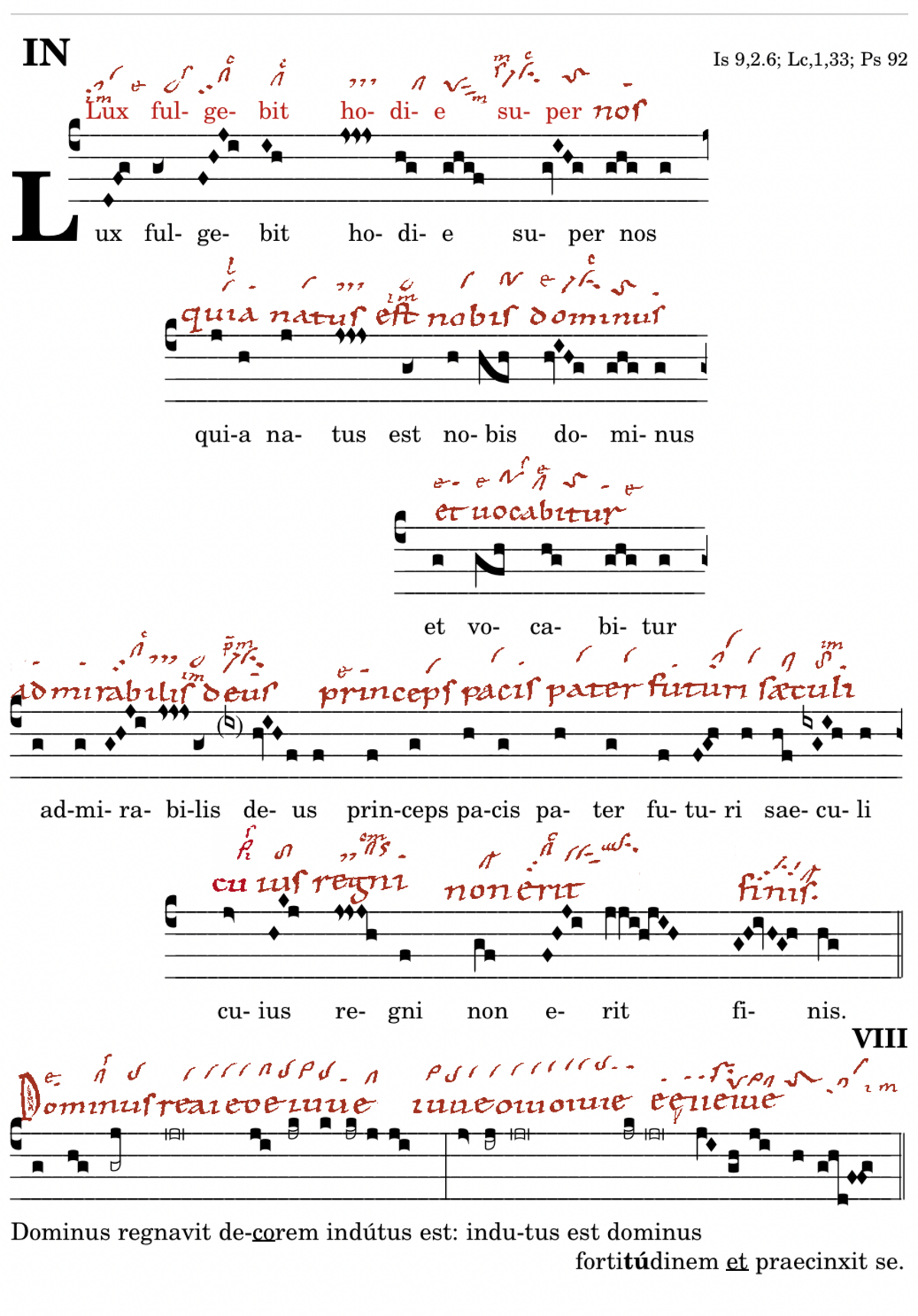
0099 IN Lux fulgebitModus 8
GT 44 - GN 1,24 - BzG 22,13 xxx ⏹️
„hodie su-per nos“ Kontext der fallenden Linie „do-si-la-sol“. Ein „sa“(nur Mp) ist hier fehl am Platz. Kl geht zum „do“. ebenso bei:
„ natus est nobis do-minus“
„admirabilis de-us“ Ka „sa“, auch das 'parvulum mediocriter' in E spricht für „sa“. Die Frage stellt sich, ob nicht auch hier noch authentisch ein „si“ und somit Tritonus stand als Ausdruck der Transzendenz in den Aussagen „fulgebit super nos - natus est nobis dominus - admirabilis deus“. Erst bei „saeculi“ würde das weltimmanente „sa“ folgen, Im folgenden „cuius regni non erit finis“ ist ohnehin wieder „si“ latent.
„su-per nos“ + „do-minus“ In beiden Fällen Kl zum „do“, daher kein si-be-molle. Hier einen Tritonusbezug herzustellen wäre absurd.
„de-us“ Hier gibt es Tritonusbezug, Kl schreibt „sa“. „pm“ = „parvulum mediocriter“ = „ein bischen mittelmäßig nach oben“ kann nur interpretiert werden als: nicht bis zum „do“, aber doch nicht nur „sa“ .
Auch bei „sae-cu-li“ lehnen wir das „sa“ ab. Das alles im 8.Ton!
„non erit“ Wenn der applizierte Oriscus bei der Clivis „reg-ni“ irgendeine modale Bedeutung hat (Festlegung/Verstärkung des „la“ !?), dann ist Bv34 unsere Wahl.
Ein Licht wird / heute über uns leuchten:
Denn geboren ist uns der Herr.
Genannt wird er:
Wunderbarer, Gott / Fürst des Friedens /
Vater der zukünftigen Welt;
seines Reiches / wird kein Ende sein.

A light will shine upon us today:
For the Lord has been born to us.
He is called:
Wonderful God / Prince of Peace / Father of the world to come;
His kingdom will have no end.
“hodie su-per nos” Context of the falling line “do-si-la-sol”. A “sa” (only Mp) is out of place here. Kl goes with “do”. likewise with:
“ natus est nobis do-minus”
“admirabilis de-us” Ka “sa”, the 'parvulum mediocriter' in E also speaks for “sa”. The question arises as to whether an “si” and thus a tritone was still authentically used here as an expression of transcendence in the statements “fulgebit super nos - natus est nobis dominus - admirabilis deus”. Only with “saeculi” would the world-immanent “sa” follow, in the following “cuius regni non erit finis” “si” is latent again anyway.