Dies ist eine alte Version des Dokuments!
🔘 IN GR TR AL OF CO xxxxx 1️⃣ 2️⃣ 3️⃣ 4️⃣ 5️⃣ ✅ 7️⃣ 8️⃣ xxxxx AN RP IV alia
1062 OF Erit vobis V1Modus 6
OF – V1 – V2 xxx ⏹️ xxx OT 63 - ON xx - BzG xx/xx
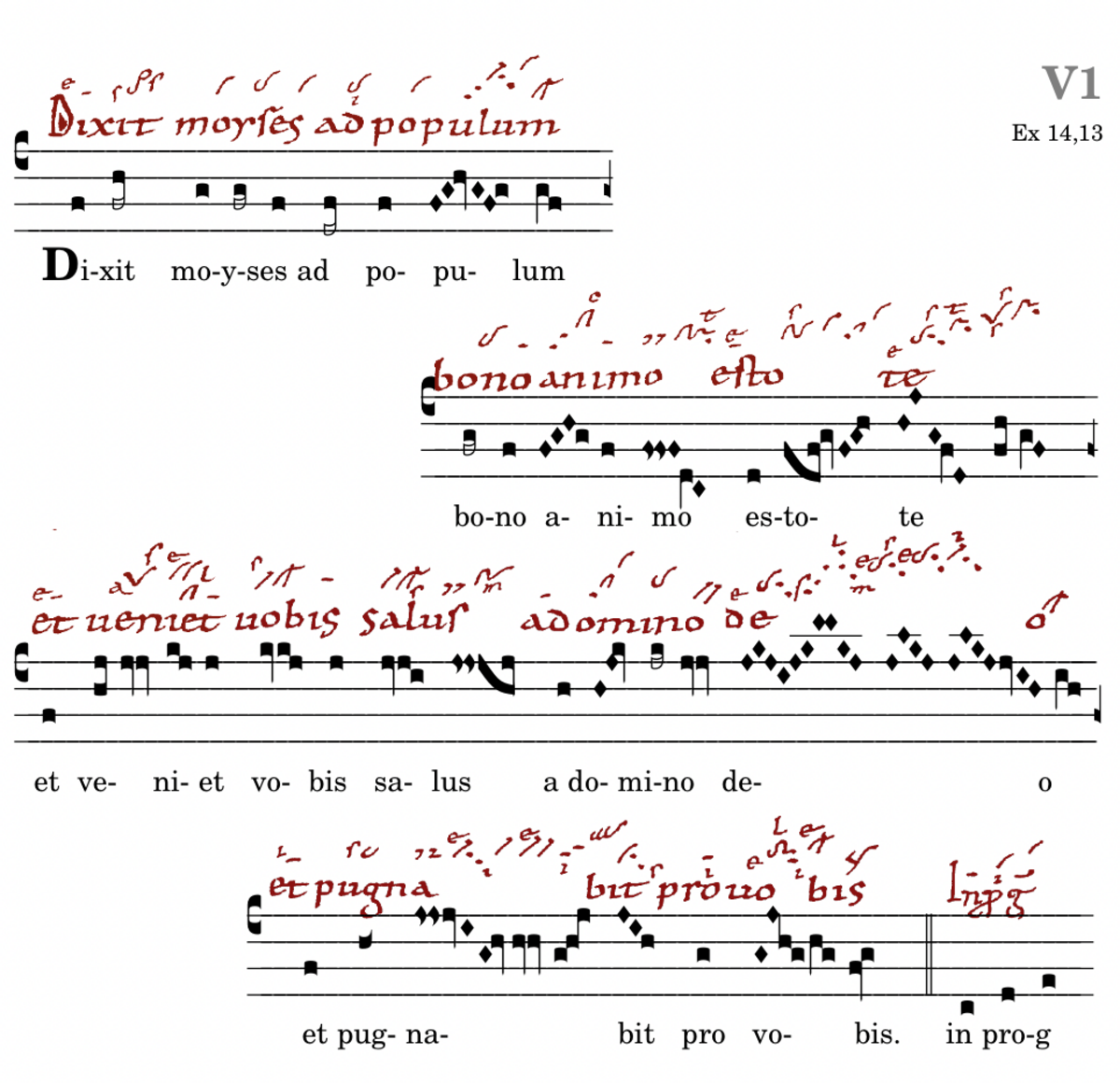
„Dixit“ FML alloq, wenn sie auch nicht zur oberen Terz führt; Betonung „Díxit“. Ch und auch L zeigen deutlich unisonischen Anschluss. Das 'sursum' in E ist bereits auf dem Weg zur 2. Gregorianik (plérosis).
 „bono animo estote“ Spiel der Pressus: Aus der Rezitation „fa“ (Finalis) etabliert der 1.Pressus den Unterschwung (katabasis) mit der festen Tonstufe „re“. In gewisser Weise zeigt er die folgende Silbe „es-tote“ an. Der Aufstieg „fa-sol-la“ auf der Silbe „es-to-te“ ist modal logisch (zwingend). Erst der nächste Pressus auf „fa“ fixiert eine überraschende neue Tonstufe, abermals die alte Finalis „fa“. Zuletzt wird am Ende des Halbsatzes die Kadenz-Wirkung mit dem Pressus „sol“ zum „fa“ erzielt.
V1. Es sprach Mose zum Volk / Sei guten Mutes,
dann wird euch das Heil zukommen vom Herrn, Gott / und es wird für euch streiten.

V1 Moses said to the people, ‘Be of good courage,
then salvation will come to you from the Lord God, / and he will fight for you.
“Dixit” FML alloq, emphasis on “Díxit.” Ch and L clearly show unison connection. The ‘sursum’ in E is already on its way to the 2nd Gregorian chant (plérosis).