🔘 IN GR TR AL OF CO xxxxx 1️⃣ 2️⃣ 3️⃣ ✅ 5️⃣ 6️⃣ 7️⃣ 8️⃣ xxxxx AN RP IV alia
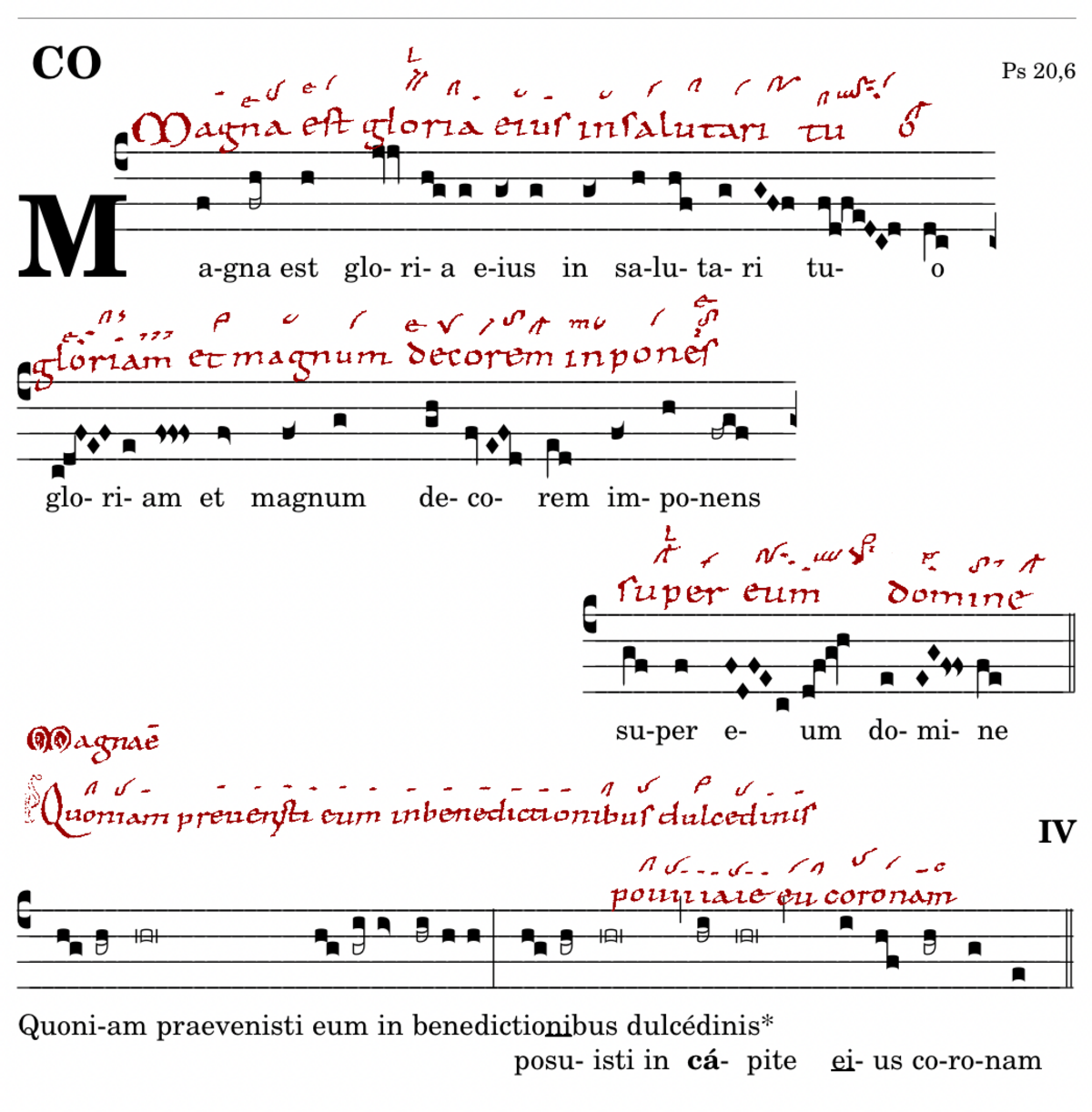
0679 CO Magna est gloria eiusModus 4
0668 ⟽ CO 4 ⟾ 0681 xxx ⏹️ xxx GT 437 - BzG 53/16 + GrN 2/153xxx 27.12. Joh.Ev 1.Messe
„Mag-na est“ Zwei Traditionen liegen vor : Erster Ton
„fa“ in Bv, D (vide BzG 40, Puderrojen), die meisten (anderen)
„sol“ A+Y,
Die Zisterzienser haben nach 1100 einen Kompromiss geschlossen: Incipit „fa“, aber zum „la“ aufsteigend, das heißt, die CO beginnt mit einer FML alloquium. Dieses strahlende Incipit hat vielleicht späteren Zeiten nicht in den DT gepasst, das als mögliche Erklärung für die Abweichungen. Die Neumen allein ( E, Ch, MR ) sehen für einen Sänger, der noch keine Notation der Tonhöhen kennt, wie eine FML alloquium aus.
„glo-riam“ Ch Der Oriscus hat hier nicht die Funktion eines Quilisma sondern die eines isolierten Oriscus: er zeigt das Erreichen der festen Tonstufe (hier „fa“) an, bevor wieder Rezitation „mi“ (nur eine Silbe) weitergeht.
„su-per“ Nur Bv schreibt hier TerzClv. Die folgende Clv ist kein Beweis, dass der Ton zuvor tiefer war.
Groß ist sein Ruhm durch deine Hilfe.
Herrlichkeit und große Pracht hast du ihm auferlegt, Herr

Great is his glory through your help.
Glory and great splendor you have placed on him, Lord.
‘Mag-na est’ There are two traditions: First note
“fa” in Bv, D (see BzG 40, Puderrojen), most (others)
‘sol’ A+Y,
After 1100, the Cistercians reached a compromise: the incipit is ‘fa’, but rising to ‘la’, meaning that the CO begins with a FML alloquium. This radiant incipit may not have fitted into the DT in later times, which is a possible explanation for the deviations. The neumes alone (E, Ch, MR) look like a FML alloquium to a singer who does not yet know the notation of pitches.
‘glo-riam’ Ch Here, the oriscus does not function as a quilisma but as an isolated oriscus: it indicates the reaching of the fixed pitch (here “fa”) before the recitation ‘mi’ (just one syllable) continues.
‘su-per’ Only Bv notates a third Clv here. The following Clv is no evidence that the note was lower previously.