🔘 IN GR TR AL OF CO xxxxx 1️⃣ ✅ 0️⃣ 3️⃣ 4️⃣ 5️⃣ 6️⃣ 7️⃣ 8️⃣ xxxxx AN RP IV alia
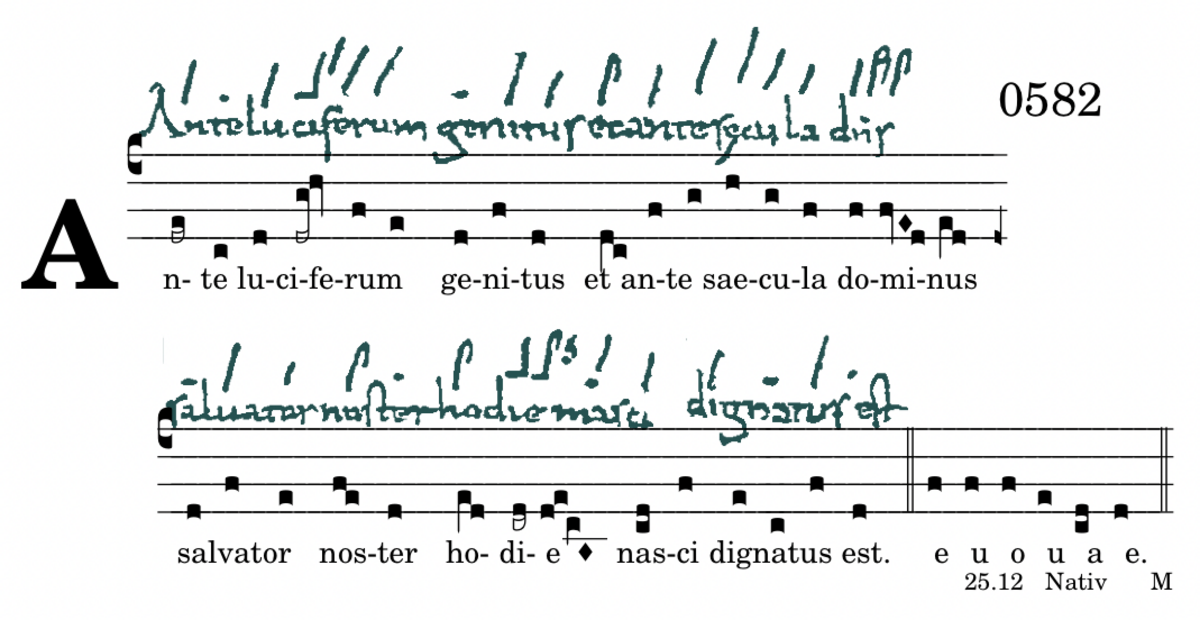
0582 AN Ante luciferum --- nasciModus 2
0565 ⟽ AN 2 ⟾ 0590 xxxxx ⏹️1.Periode 1.modus - 2.Periode 2.modus
1INC VrgStr vermischt mit:
1INC ad4
1MED triv 1acc de infra. +
FML ClmCl
2INC ad3 2acc M „sal-vá-tor nós-ter“
8TER katab Das Wort „hódie“ erhält durch die katabasis ein starkes Gewicht.
2TER typ acc.ult. mi/fa? Wc solo „fa“ (do-Revision), kein Bv, Tol „mi“, das ist für Tol nicht ungewöhnlich. Bleibt die Frage nach dem Gewicht des Akzentes „salvator noster hodie nasci dignátus est“: Nach den Akzenten „hódie násci“ kann „dignatus est“ nur zweitrangig sein. Die lange Virga in MR spricht allerdings für „fa“.
Vor dem Morgenstern geboren, und vor aller Zeit ist der Herr,
unser Erlöser, heute der Welt erschienen

Born before the morning star, and before all time, the Lord,
our Saviour, has appeared to the world today
1st period 1st mode - 2nd period 2nd mode
1INC VrgStr mixed with:
1INC ad4
1MED triv 1acc de infra. +
FML ClmCl
2INC ad3 2acc M „sal-vá-tor nós-ter“\
8TER katab The word „hódie“ is given a strong weight by the katabasis.
2TER type acc.ult. mi/fa? Wc solo „fa“ (do revision), no Bv, Tol „mi“, which is not unusual for Tol. The question remains as to the weight of the accent „salvator noster hodie nasci dignátus est“: After the accents „hódie násci“, „dignatus est“ can only be secondary. The long virga in MR, however, speaks in favour of „fa“.