🔘 IN GR TR AL OF CO xxxxx 1️⃣ 2️⃣ ✅ 4️⃣ 5️⃣ 6️⃣ 7️⃣ 8️⃣ xxxxx AN RP IV alia
0947 OF Domine vivifica me V1Modus 3
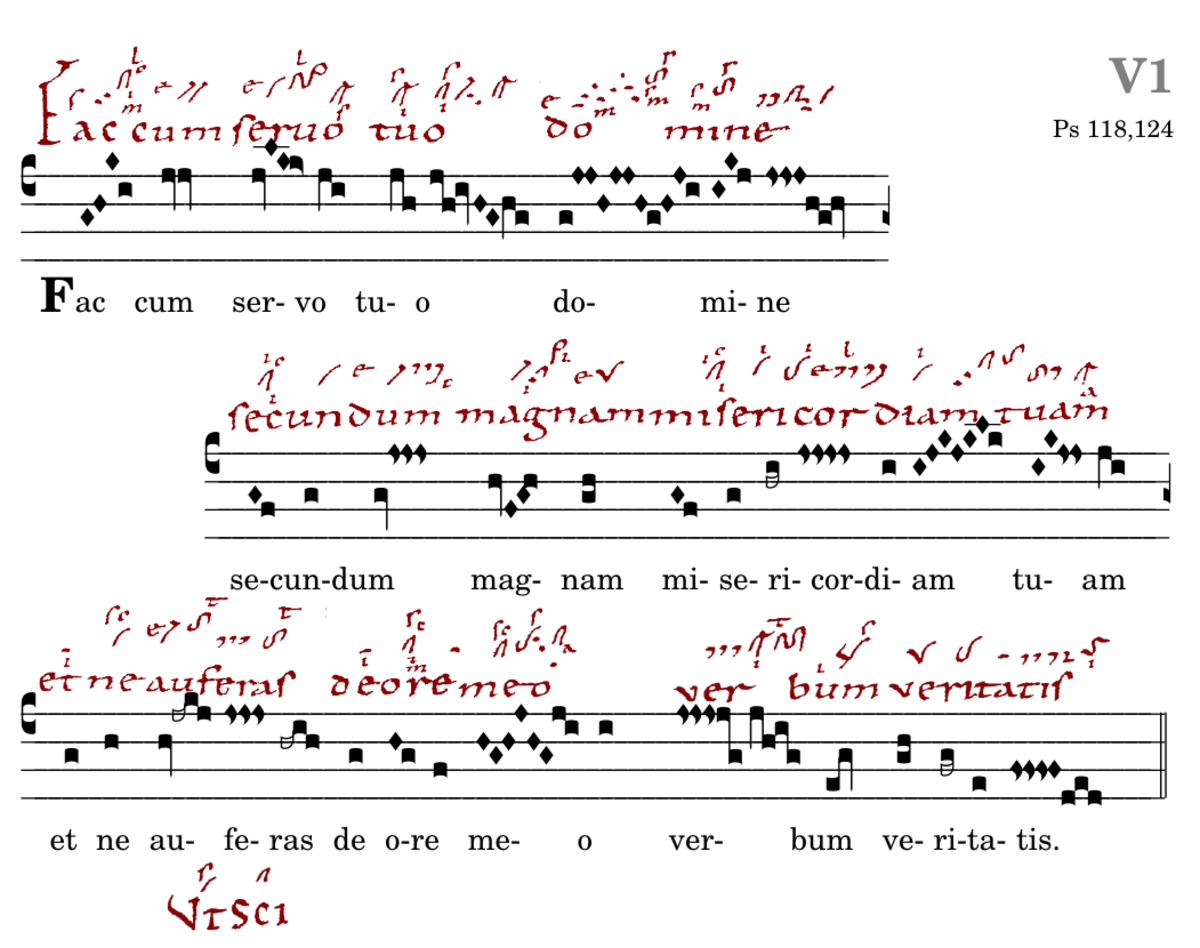
OF – V1 – V2 xxx ⏹️ xxx OT 31 - ON - BzG 69/33„do-mi-ne“ Keine der adiastematischen Hss kann zum genauen Melodieverlauf etwas beitragen. GN verbessert die Torculusgraphie des GR „si-re-si“ zurecht auf „la-do-si“ aus. Auch der folgende Trc „si-re-do“ (Bv34) ist logisch. Die Buchstaben in E verwirren: ein unisonischer Anschluss zwischen den beiden Silben kann nicht mit „sm“ notiert werden. Egal wie man es dreht und wendet: Die Buchstaben in E sind nicht schlüssig. Verbirgt sich hier die do-Revision bereits im codex E?
V1. Tu an deinem Knecht, Herr / nach deinem großen Erbarmen,
und nimm nicht von meinem Mund / das Wort der Wahrheit.

V1. Do to your servant, Lord, according to your great mercy,
and do not take from my mouth / the word of truth.
‘do-mi-ne’ None of the adiastematic Hss can contribute anything to the exact course of the melody. GN rightly improves the torculus graph of the GR ‘si-re-si’ to ‘la-do-si’. The following Trc “si-re-do” (Bv34) is also logical. The letters in E are confusing: a unison connection between the two syllables cannot be notated with ‘sm’. No matter how you twist and turn it: The letters in E are inconclusive. Is the do revision already hidden in the codex E?