🔘 IN GR TR AL OF CO xxxxx 1️⃣ 2️⃣ 3️⃣ ✅ 5️⃣ 6️⃣ 7️⃣ 8️⃣ xxxxx AN RP IV alia
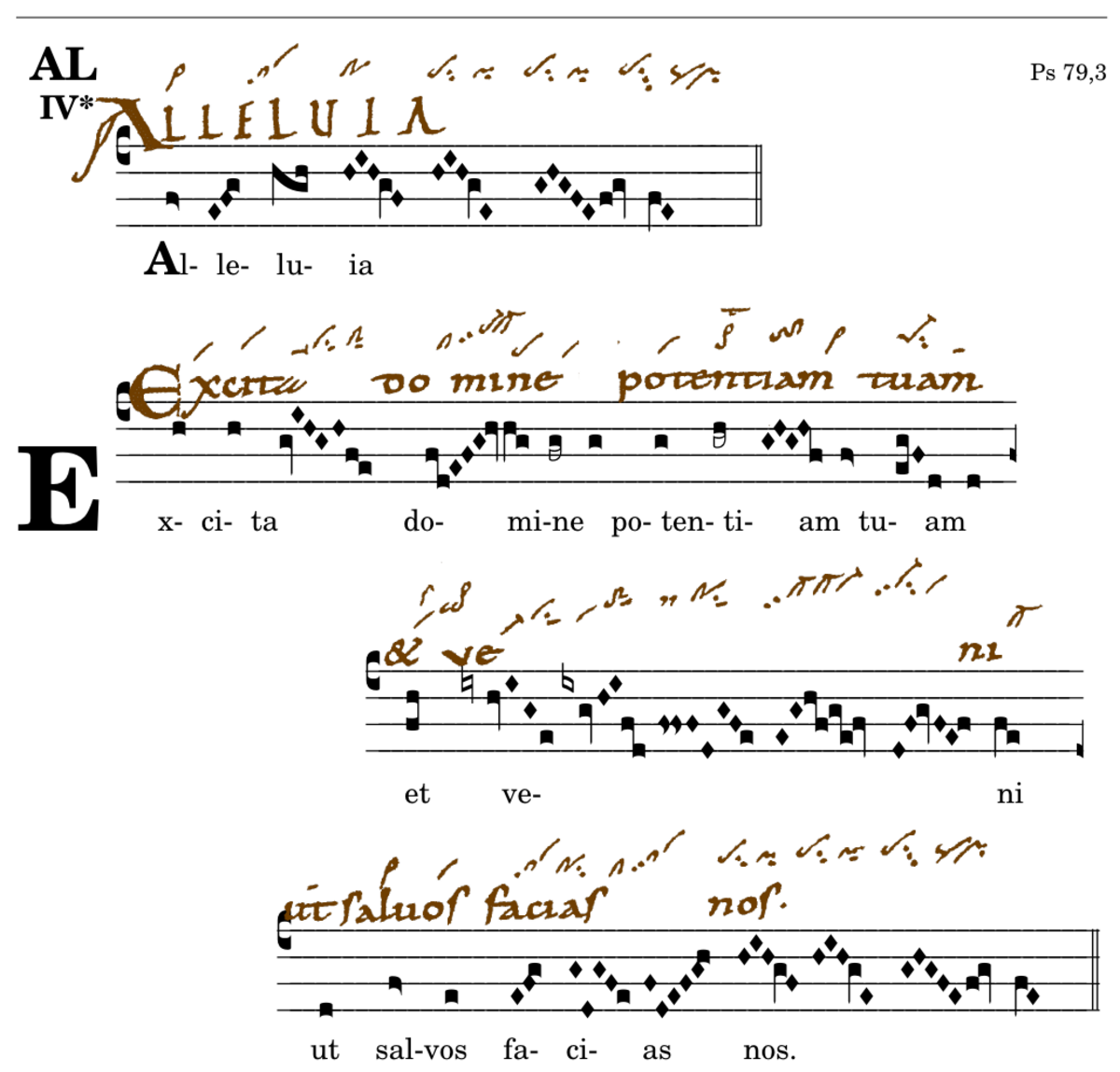
0345 AL Excita domineModus 4*
0342 ⟽ AL 4 ⟾ 03540342 ⟽ AL 4* ⟾ 0374 xxx ⏹️xxx GT 23 - GN 1/14 - BzG 21/31
 Das GrN behält in diesem Typus-Alleluia das si-be-molle (b) bei; trotz des “do” in Kl. Warum? Wollte man sich nicht auf eine ästhetische Auseinadersetzung einlassen zwischen einem von der schwülen Harmonik des späten 19.Jahrhunderts geprägten Geschmack und Hörgewohnheiten, die durch die Schule der Atonaliät gegangen sind? Eine reine Quart, die sich in die verminderte Quint “auflöst” soll schöner sein als ein Tritonus, der sich in die reine Quint auflöst?
Hier ist zu erinnern, was Luigi Agustoni zum si im Deuterus festhält:
“h in Bezug zu do oder unterem mi, b in Bezug zu unterem fa; In Bezug zu sol und mi ist das b fragwürdig, sosehr es auch in späterer Tradition bestätigt wird. EiGC S.51.
V. Erwecke, Herr, deine gewaltige Macht / und komm, um uns heil zu machen!

V. Awaken, Lord, your mighty power / and come to make us whole!
The GrN retains the si-be-molle (b) in this type alleluia; despite the ‘do’ in cl. Why? Wasn't the intention to engage in an aesthetic debate between a taste characterised by the sultry harmonies of the late 19th century and listening habits that have gone through the school of atonality? A perfect fourth that ‘dissolves’ into a diminished fifth is supposed to be more beautiful than a tritone that dissolves into a perfect fifth?
Here we should remember what Luigi Agustoni writes about si in the Deuterus:
„h in relation to do or lower mi, b in relation to lower fa; in relation to sol and mi the b is questionable, however much it is confirmed in later tradition. EiGC p.51.